A knee that suddenly gives way can make stairs, squats, running, or even a short walk feel unpredictable. If you are asking, “why does my knee buckle?”, the answer is not always simple. Buckling can happen when pain briefly shuts down the muscles around the joint, when the knee is unstable after an injury, or when another structure is not tolerating the load being placed on it.
One episode after an awkward step is different from a knee that repeatedly collapses during daily activity. The pattern matters. So do the details: whether there was swelling, a twist, a pop, locking, pain in a specific area, or a feeling that the knee shifted out of place.
What Knee Buckling Actually Means
“Knee buckling” describes a sensation that the leg cannot support you for a moment. Some people feel the knee bend unexpectedly. Others feel it wobble, shift, or give way when they put weight through it.
That feeling does not automatically mean a ligament is torn. A painful knee can reflexively reduce muscle activation, especially in the quadriceps at the front of the thigh. This is sometimes called muscle inhibition. The knee may feel unreliable because the muscles are not responding strongly enough at that moment, even if the joint itself is structurally stable.
However, true instability can also occur after ligament injury, patellar dislocation, or certain meniscus injuries. An assessment is useful because the treatment plan for pain-related buckling is very different from the plan for a knee that is mechanically unstable.
Why Does My Knee Buckle? Common Causes
Pain-related quadriceps inhibition
Pain is one of the most common reasons a knee gives way. Knee osteoarthritis, patellofemoral pain, a flare-up after increased activity, and irritation inside the joint can all make the quadriceps less effective. You may notice buckling when getting up from a chair, going downstairs, walking downhill, or after you have been on your feet for a while.
This can become a frustrating cycle. Pain leads to guarding, guarding reduces confidence and strength, and reduced capacity makes normal activities feel harder. Rest alone may settle symptoms temporarily, but it does not always rebuild the knee's ability to accept load.
Ligament injury or knee instability
The ACL, MCL, LCL, and PCL help control knee movement. A significant twist, sudden change of direction, awkward landing, or contact injury can strain or tear one of these ligaments. An ACL injury often involves a pop, rapid swelling, and a feeling that the knee gives out with turning or pivoting, although symptoms vary.
Not every ligament injury requires surgery, but repeated instability deserves proper assessment. Continuing to pivot, cut, or play sport on an unstable knee can increase the risk of further joint irritation or secondary injury.
Meniscus injury
The meniscus is a cartilage-like structure that helps distribute load in the knee. A meniscus injury may occur with a twist, deep squat, or degeneration over time. Symptoms can include pain along the inside or outside joint line, swelling, catching, difficulty fully straightening the knee, or buckling.
The word “tear” does not automatically determine treatment. Many meniscus changes seen on imaging are manageable without surgery. What matters is how the knee behaves, whether it is truly locking, how much function is limited, and whether symptoms improve with a structured rehabilitation plan.
Patellar instability or kneecap tracking problems
If the kneecap partially slips or fully dislocates, it can feel like the knee suddenly shifts sideways. This is more common after a direct blow or twisting event, but it can also occur in people with a history of patellar instability. Swelling, apprehension with bending the knee, and pain around the front or inside edge of the kneecap are common.
Front-of-knee pain without a dislocation can also make stairs, lunges, running, and prolonged sitting uncomfortable. In these cases, improving hip, thigh, and calf strength while gradually rebuilding tolerance to knee bending is often more useful than simply avoiding every painful movement.
Tendon, muscle, or joint irritation
Patellar tendinopathy, quadriceps tendon irritation, a muscle strain, or a sudden increase in training volume can make the knee feel weak or unreliable. So can arthritis-related stiffness and swelling. The important distinction is whether the sensation is caused by pain and reduced control or by a true structural instability.
A sore tendon may hurt during jumping or squatting but remain stable during walking. A swollen arthritic knee may buckle late in the day after a lot of standing. The same word, “giving way,” can describe very different clinical problems.
Symptoms That Should Not Be Ignored
Seek urgent medical assessment if knee buckling follows a major injury and you cannot bear weight, the knee looks deformed, swelling is severe and rapid, or the joint is hot, red, and you feel unwell. A locked knee that cannot fully bend or straighten also needs timely assessment.
Arrange an assessment soon if the knee repeatedly gives way, you heard a pop at the time of injury, swelling keeps returning, or you cannot trust the leg on stairs, at work, or during sport. For active adults, tradespeople, and parents carrying kids around Hamilton, repeated buckling is not just annoying. It raises the chance of a fall and often causes people to stop moving in ways that further reduce strength and confidence.
How a Knee That Buckles Is Assessed
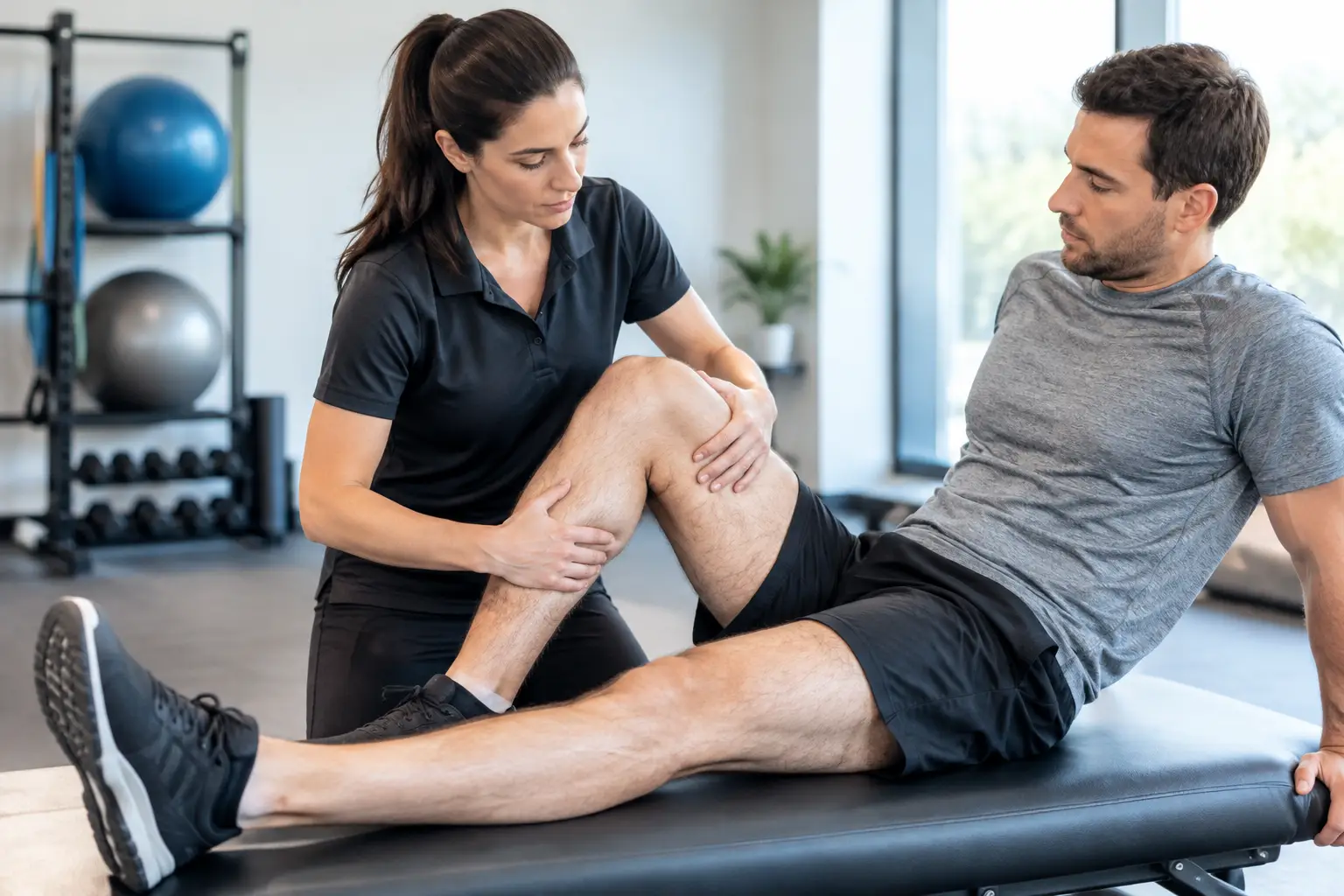
A useful assessment starts with the story, not just the painful spot. The mechanism of injury, timing of swelling, location of pain, aggravating tasks, previous injuries, training changes, and exact description of the buckling episode all help narrow down what may be driving it.
The physical examination may include observing walking, squatting, step-downs, single-leg control, range of motion, swelling, strength, joint-line tenderness, and specific ligament or meniscus tests. When indicated, a clinician may recommend medical imaging or referral to clarify a suspected significant ligament injury, fracture, or internal joint issue.
The goal is not to label every knee as weak or unstable. It is to identify the most likely limiting factor and build a plan that matches your current capacity and goals.
Treatment and Rehabilitation for Knee Buckling
Early treatment may focus on settling pain and swelling enough to restore normal movement. Depending on the presentation, hands-on treatment such as joint mobilization, deep soft tissue therapy, or instrument-assisted soft tissue work may help reduce sensitivity and improve short-term movement options. These approaches are not a standalone fix. They should support a progressive plan rather than replace one.
For some tendon-related cases, shockwave therapy or Class IV laser therapy may be considered as an adjunct when clinically appropriate. Their value depends on the diagnosis, irritability of the tissue, and the broader loading program. The core work is rebuilding the knee's capacity to handle the tasks that matter to you.
That usually means progressive strengthening for the quadriceps, hamstrings, calves, and hip muscles, along with balance and control work when appropriate. The exercises should reflect the activity that causes the problem. Someone whose knee gives way on stairs needs a different progression than a soccer player who feels unstable when changing direction.
Loading needs to be challenging enough to create adaptation without repeatedly flaring the knee. This is where generic online programs often fall short. They may include reasonable exercises, but they cannot account for your swelling, movement tolerance, job demands, injury history, or the specific point where your knee starts to feel unreliable.
At Ground Up Rehab, care is built around a thorough assessment, meaningful hands-on treatment when it is useful, and progressive rehabilitation that helps you return to training, work, sport, and daily life with more confidence. The aim is not to chase temporary relief. It is to understand why the knee is buckling and improve the strength, movement control, and load tolerance behind it.
A buckling knee does not always signal a serious injury, but it is a symptom worth taking seriously when it repeats or limits what you can do. Book an assessment if this sounds familiar, especially if you have started changing how you walk, train, work, or use stairs because you no longer trust your knee.
