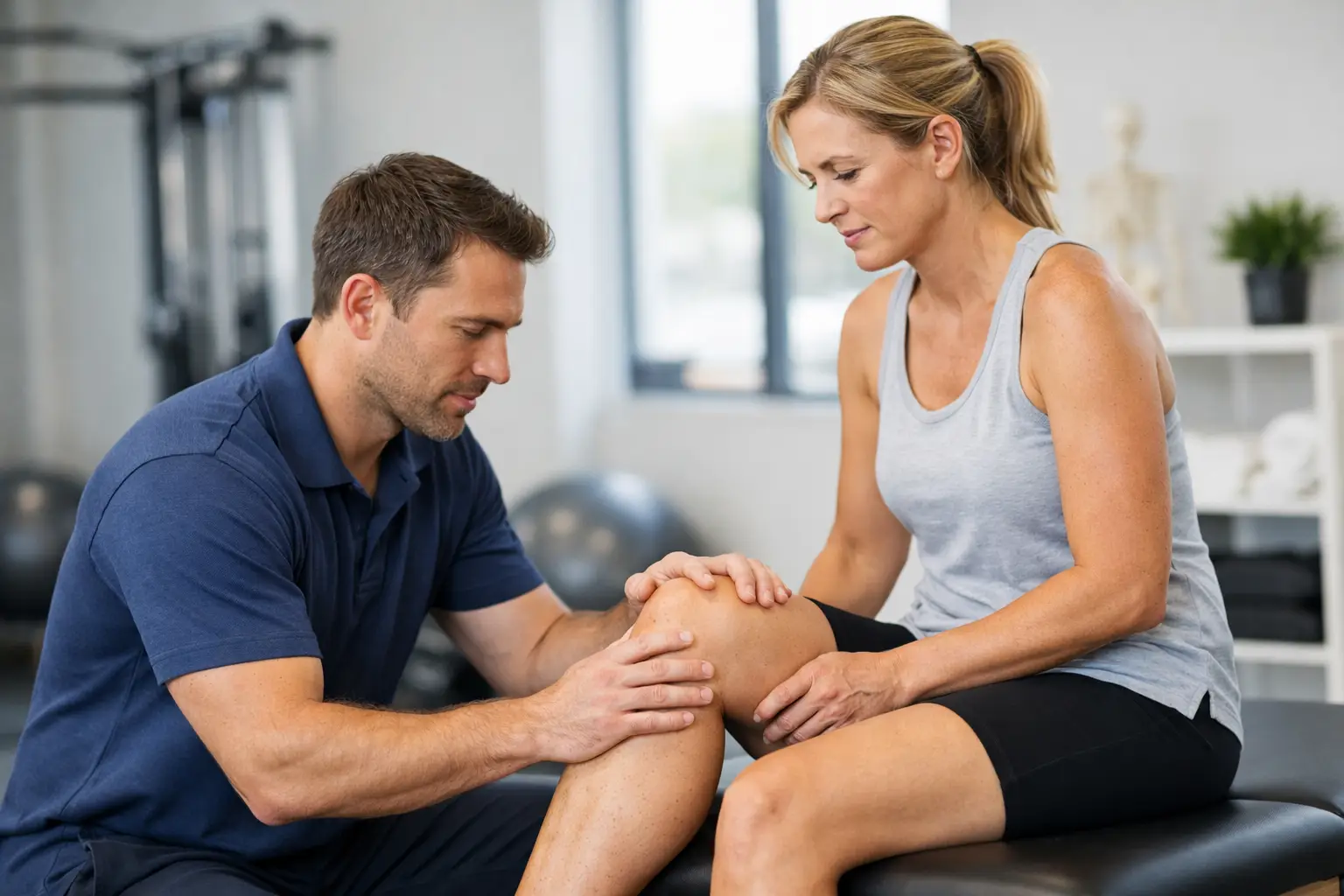
That nagging pain at the Achilles when you start running, the elbow ache after a day on the tools, or the sore knee below the kneecap during squats is not always a strain that simply needs more stretching. These can be top signs of tendon overload - a common problem when a tendon is being asked to tolerate more load than it is currently prepared for.
Tendon pain can be frustrating because it often feels manageable at first. You may be able to train, work, or play through it, only to find that symptoms keep returning or gradually become more limiting. The goal is not to panic at the first ache. It is to recognize the pattern early, adjust the right variables, and rebuild your capacity with a clear plan.
What tendon overload actually means
Tendons connect muscle to bone. They transfer force when you push off while running, grip a tool, climb stairs, press overhead, or get up from a chair. They are built to handle load, but they adapt gradually. Problems can develop when the amount, intensity, frequency, or type of loading increases faster than the tendon can recover and adapt.
Tendon overload is often associated with tendinopathy, a term used for persistent tendon pain and reduced tolerance to activity. Common areas include the Achilles tendon, patellar tendon below the kneecap, rotator cuff tendons at the shoulder, gluteal tendons at the outside of the hip, plantar fascia at the foot, and the tendons around the elbow.
This does not necessarily mean the tendon is torn or permanently damaged. In many cases, it means the tendon has become sensitive to load and needs a more appropriate progression. Complete rest may reduce pain temporarily, but it does not automatically restore the capacity needed for running, lifting, repetitive work, or sport.
Top signs of tendon overload
Pain that is linked to a specific activity or load
Tendon pain usually has a clear mechanical pattern. It may show up during a run, when jumping, after gripping, while pressing overhead, or when rising from a deep squat. The same movement tends to reproduce it more reliably than random day-to-day activity.
For example, Achilles tendon overload may hurt during push-off or hill running. Patellar tendon pain may appear with jumping, stairs, or heavy knee-bend exercises. Tennis elbow may flare with gripping, lifting a pan, using a screwdriver, or pulling exercises at the gym.
Stiffness when you first get moving
Morning stiffness or pain with the first few steps after sitting is a familiar tendon pattern, especially with the Achilles tendon and plantar fascia. It may ease after you move around, which can make people assume the problem is gone. However, symptoms often return later after a busy day or training session.
Stiffness is useful information, not a reason to stop moving altogether. It tells you the tissue may not be tolerating its current workload well.
Pain that warms up, then returns after activity
A tendon can feel better once you are warmed up, particularly early in an overload problem. You may finish a workout feeling fine, then notice more pain that evening or the following morning. This delayed response is one reason tendon issues can be easy to underestimate.
A small, predictable discomfort that settles quickly may be manageable within a rehab plan. Pain that becomes progressively worse during activity, changes how you move, or noticeably increases the next day is a sign that your current load may be too high.
Local tenderness and sensitivity
Tendon pain is often fairly localized. Pressing on the tendon or the area where it attaches to bone may reproduce the familiar symptom. You might also notice mild thickening or swelling in some tendons, although not everyone does.
Local tenderness alone does not confirm a diagnosis. Muscles, joints, bursae, and nerves can also cause pain near a tendon. The full pattern matters: location, aggravating activities, strength, range of motion, and how symptoms behave over time.
Reduced strength, confidence, or spring
Overload can make a tendon feel less reliable. A runner may lose confidence pushing off. A lifter may avoid heavy pressing because the shoulder feels weak or painful. A tradesperson may find their grip fades earlier than usual. Sometimes this is true weakness; sometimes it is the nervous system limiting force because the area is painful.
A loss of spring is particularly common with lower-limb tendon problems. Hopping, jumping, accelerating, or walking uphill can feel uncomfortable long before normal walking becomes a major issue.
Symptoms that keep returning after rest
If you keep resting until the pain settles, then return to the same training volume or job demands and flare up again, the problem is likely not a lack of rest alone. It is often a capacity mismatch. The tendon may need a gradual loading plan that bridges the gap between what it can do now and what you need it to do.
Why tendons become overloaded
The trigger is rarely one isolated factor. A sudden jump in running distance, adding hill work, returning to the gym after time off, starting a physically demanding job, or playing more pickleball than usual can all contribute. So can a change in footwear, surface, equipment, technique, or recovery routine.
Load is not only exercise. Repetitive work, long periods standing, stair climbing, carrying children, and physically demanding home projects all count. A person may tolerate one stressor well, but struggle when several increase at the same time.
There are also individual factors. Previous tendon pain, reduced strength after an injury, limited tolerance to certain movements, some medications, and health conditions can influence tendon recovery. Age alone is not the cause, but tendons often need more deliberate loading progressions as training history and recovery demands change.
What commonly aggravates tendon pain
The aggravating activity depends on the tendon involved, but the common theme is repeated or high-force loading. Fast increases in volume are often more provocative than one challenging session that your body is already prepared to handle.
For an irritated Achilles tendon, hills, speed work, and sudden increases in walking can be an issue. For patellar tendon pain, jumping, deep knee flexion under load, and rapid changes in court-sport volume may aggravate symptoms. Elbow tendons often dislike repeated gripping, twisting, and heavy lifting with the wrist in an awkward position.
This does not mean these activities are bad. They are usually the activities worth returning to. The question is how to modify them temporarily, then reintroduce them at a dose the tendon can adapt to.
When tendon pain should be assessed
Consider an assessment if pain has lasted more than a couple of weeks, keeps returning, affects your work or training, or causes you to change how you move. It is also worth getting help if you have tried rest, stretching, massage, or generic online exercises without meaningful progress.
Seek prompt medical assessment for a sudden pop, bruising, a visible deformity, an inability to push off, lift, or bear weight normally, significant swelling or redness, fever, or pain that is severe and unexplained. These symptoms can point to a more significant injury or condition that needs timely evaluation.
How a proper tendon assessment guides rehab
A useful assessment should look beyond the sore spot. It should identify which tasks provoke symptoms, when pain occurs, how the tendon responds the next day, and what strength or movement limitations may be contributing. Your clinician may use specific resistance tests, hopping or functional tests, range-of-motion measures, and a review of recent training, work, and activity changes.
Imaging is not always needed. Tendon changes can appear on scans in people with no pain, while a painful tendon may not look dramatic on imaging. A thorough clinical assessment often provides the most useful starting point, with imaging considered when the history suggests a tear, another diagnosis, or a need for additional medical investigation.
Treatment is more than passive relief
Hands-on care may help settle symptoms and improve movement in the short term. Depending on the presentation, treatment can include deep soft tissue therapy, instrument-assisted soft tissue therapy such as Graston, joint mobilization, cupping, shockwave therapy, or Class IV laser therapy. These options are not standalone cures, and they are not a replacement for rebuilding strength and load tolerance.
The central part of tendon rehabilitation is progressive loading. Early exercises may use controlled isometric holds or slow resistance work to introduce load without overwhelming symptoms. From there, the program can progress to heavier strength work, then faster or more sport-specific tasks such as hopping, jumping, sprinting, lifting, gripping, or change-of-direction drills.
Progression should reflect your goal. A recreational runner needs a different plan than a warehouse worker, golfer, or competitive lifter. The right plan accounts for your available time, equipment, current symptoms, and the activities you need to return to.
Build capacity instead of chasing a pain-free day
The best response to tendon overload is usually not to stop everything indefinitely or push through any amount of pain. It is to find the workable middle ground: reduce the most aggravating load temporarily, keep moving where possible, and build capacity in a structured way.
At Ground Up Rehab in Hamilton, care is built around that process - identifying what is driving the flare-up, using hands-on treatment when it supports progress, and creating a strength-based return-to-activity plan. If these signs sound familiar, book an assessment and get a plan that helps you return to training, work, sport, and daily life with more confidence.
