A sharp ache beside one side of your low back that flares when you roll over in bed, climb stairs, or get out of the car can be frustratingly hard to pin down. The signs of sacroiliac joint pain can overlap with low back, hip, glute, and even sciatic-type symptoms, which is why a proper assessment matters more than trying to label every ache yourself.
The sacroiliac, or SI, joint sits where the base of the spine meets the pelvis. There is one on each side. These joints transfer force between your trunk and legs when you walk, run, lift, turn, and change positions. They do not need large amounts of movement, but they do need to tolerate load well. When the area becomes irritated or sensitive, everyday tasks can start to feel surprisingly difficult.
Common Signs of Sacroiliac Joint Pain
SI joint-related pain is often felt low in the back, close to the bony dimples over the pelvis. Many people point to one specific spot rather than describing pain across the entire low back. It may stay local, or spread into the buttock, outside of the hip, groin, or upper thigh.
Pain can be sharp with a particular movement, then settle into a deep ache afterward. Some people describe a feeling of catching, stiffness, or instability around the pelvis, especially after sitting still or standing in one position for too long. That sensation does not necessarily mean anything is out of place. It more often reflects an irritated area that is not currently tolerating movement or load well.
Symptoms commonly become more noticeable with activities that load one leg or rotate the pelvis. That can include walking uphill, climbing stairs, running, stepping into pants, getting in or out of a vehicle, or standing with most of your weight on one side. Turning in bed, rising from a chair, and carrying a child on one hip can also aggravate the area.
Pain may occur on one side, but not always. It can be felt on both sides, particularly when there has been a broader flare-up of low back and pelvic pain. Numbness, tingling, or pain travelling below the knee is less typical of isolated SI joint pain and deserves a closer look at the lumbar spine and nervous system.
Why SI Joint Pain Can Be Hard to Identify
The SI joint sits in a crowded neighbourhood. The lower back, hip joint, gluteal tendons, deep hip muscles, lumbar discs, and nerves can all refer pain into similar areas. A sore spot near the back of the pelvis does not automatically confirm that the SI joint is the source.
This is also why one test, one scan, or one tender point rarely tells the whole story. Imaging can be useful when there is a concern for a specific injury or medical condition, but it does not always explain mechanical pain. Many people have age-related findings on imaging without symptoms, while others have significant pain with scans that reveal little of concern.
A useful assessment looks at the full pattern: where symptoms occur, how they started, what movements provoke them, what has changed in training or work, and how the back, hips, pelvis, and legs tolerate movement. The goal is not to chase a single structure at all costs. It is to identify the most likely contributors and build a plan that improves your capacity.
Common Causes and Contributors
SI joint pain can develop after a clear event, such as a fall, awkward lift, collision, or sudden increase in training. It can also build gradually. A runner adding hills and mileage, a lifter returning quickly to heavy deadlifts, or a tradesperson spending long days twisting and carrying may notice symptoms without one obvious injury moment.
Pregnancy and the postpartum period can also change how the pelvis responds to load. Hormonal changes, altered movement demands, disrupted sleep, and the repeated lifting and carrying that comes with caring for a baby can all be relevant. The right approach depends on the individual, their symptoms, and where they are in their return to activity.
Limited hip movement, reduced trunk or hip strength, poor tolerance to single-leg loading, and an abrupt change in workload can contribute. None of these automatically cause SI pain, and there is no single “perfect” posture or movement pattern. The more practical question is whether your current capacity matches the demands you are asking your body to handle.
What May Aggravate It
Long periods of sitting can irritate some people, while prolonged standing bothers others. Often, the issue is not one position itself but staying there too long without enough movement variation. Repeated bending and twisting, uneven carrying, deep lunges, high-impact exercise, and heavy lifting may also trigger symptoms when the area is already sensitive.
Complete rest can calm a severe flare temporarily, but it is rarely a long-term solution. Avoiding all loading for weeks can leave the back, hips, and legs less prepared for normal activity. On the other hand, forcing through sharp pain or repeatedly testing a painful movement can keep the cycle going. A better approach is to find a tolerable starting point and progress from there.
When to Have It Assessed
Book an assessment if pain is limiting work, sleep, walking, training, parenting, or everyday movement, particularly if it keeps returning. It is also worth getting help when you have tried rest, stretching, generic exercises, massage, or short-term treatment but symptoms return as soon as you resume normal activity.
Some symptoms require more urgent medical attention. Seek prompt care for new bowel or bladder changes, numbness around the groin or saddle area, significant or progressive leg weakness, fever, unexplained weight loss, severe pain after significant trauma, or pain that is constant and worsening without a clear mechanical pattern. These symptoms are not typical signs of straightforward SI joint-related pain.
How SI Joint-Related Pain Is Assessed
A thorough assessment starts with your story. When did the pain begin? Does it appear after sitting, lifting, running, or turning in bed? Is it local, or does it travel? What activities have you reduced, and what have you already tried?
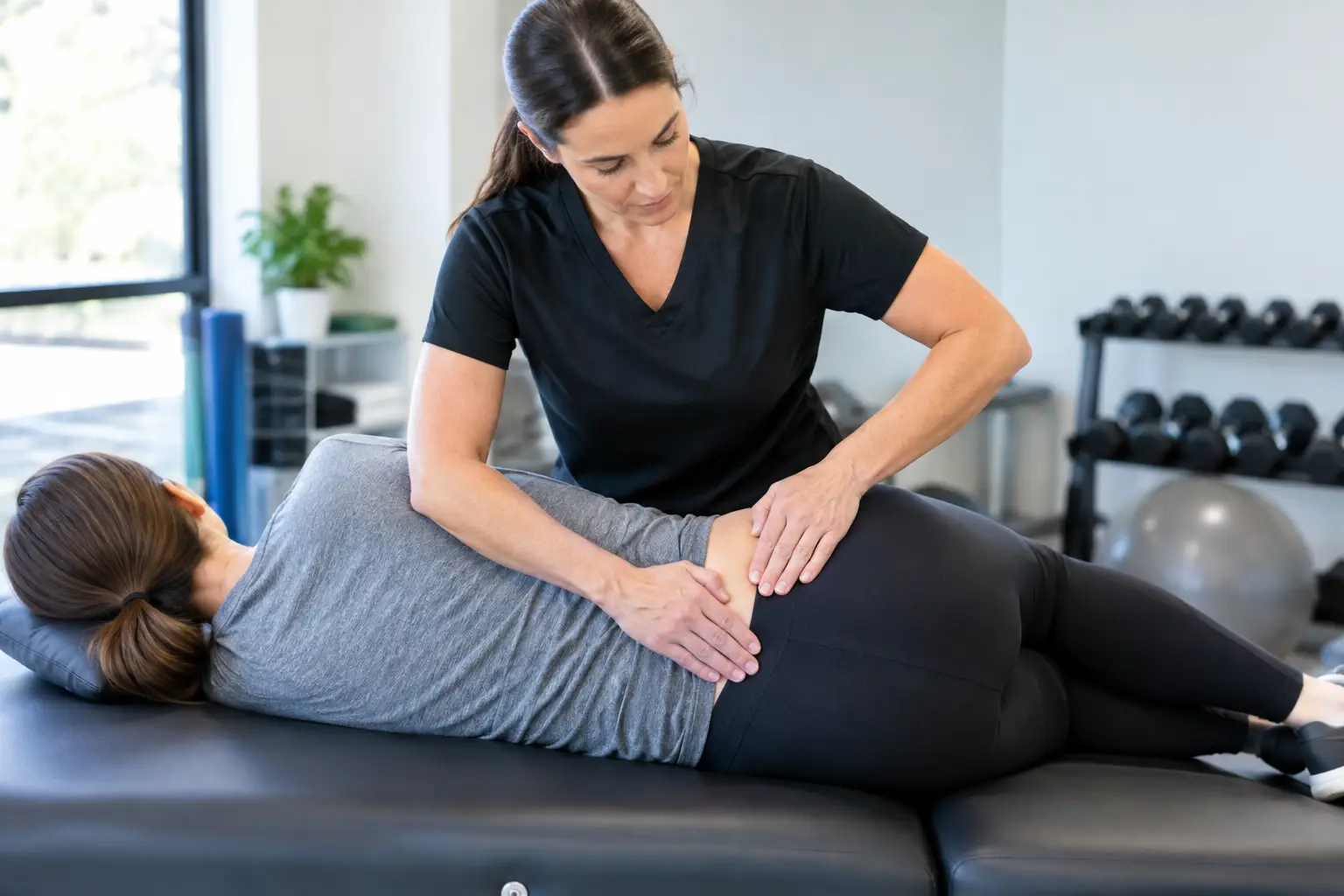
From there, a clinician may assess lumbar and hip movement, strength, balance, walking, squat and hinge patterns, and your tolerance to single-leg tasks. Several clinical provocation tests may be used together to see whether loading the SI region reproduces your familiar symptoms. These tests are more useful as part of the full picture than as a stand-alone diagnosis.
The assessment should also rule in or rule out other common sources of pain, including hip joint irritation, lumbar spine conditions, gluteal tendon pain, and nerve-related symptoms. That distinction changes the rehabilitation plan.
Treatment Should Build More Than Short-Term Relief
Early treatment may focus on reducing irritability and restoring more comfortable movement. Depending on the findings, this can include joint mobilization or manipulation when appropriate, deep soft tissue treatment, instrument-assisted soft tissue therapy, cupping, or Class IV laser therapy. These options may help some people settle symptoms and move more comfortably, but they are not standalone cures.
The long-term work is progressive rehabilitation. That may begin with controlled trunk and hip exercises, breathing and bracing strategies, and modified versions of painful tasks. As tolerance improves, the plan should progress toward meaningful loading: squats, hinges, step-ups, carries, running drills, work-specific tasks, or the lifts and movements you actually want to return to.
For example, someone whose pain flares during deadlifts may need more than a few stretches. They may need a temporary adjustment to range, load, or volume, followed by a structured return to hinging and heavier lifting. A runner may need to manage hills, speed work, and weekly mileage while rebuilding single-leg strength and impact tolerance. The right plan depends on the activity you need your body to handle.
A Practical Rehab Approach in Hamilton
At Ground Up Rehab, SI joint-related pain is approached as a movement and load-tolerance problem, not just a painful spot to treat. Hands-on care can be useful when it helps you move with less pain, but it should support a clear rehabilitation plan rather than replace one. Your program should make sense for your job, training, sport, and current starting point.
If these symptoms sound familiar, book an assessment to clarify what is driving your pain and get a plan for returning to work, training, and daily life with more confidence.
