A run that starts normally but turns into a growing ache along the inside of your shin is a familiar problem for many active people. Shin splint symptoms can make running, jumping, hills, and even walking after a workout uncomfortable. They are common, but they should not automatically be dismissed as something you simply need to push through.
The term “shin splints” usually refers to medial tibial stress syndrome, or MTSS. This is an overuse-related pain presentation affecting the inner border of the tibia, the large bone at the front of the lower leg. It often develops when the tissues and bone in this area are being asked to tolerate more load than they are currently prepared for.
What do shin splint symptoms feel like?
The most common symptom is a diffuse ache or tenderness along the lower half of the inner shin. Rather than one exact pinpoint spot, the discomfort often covers a longer area, usually more than a few centimetres. It may show up at the beginning of a run, settle as you warm up, then return afterward. As irritation progresses, the pain can begin earlier in a workout and linger longer after it ends.
Some people notice soreness when pressing along the inside edge of the shin, stiffness when getting out of bed, or discomfort going downstairs after running. Hopping, jogging on hard surfaces, skipping, and repeated calf raises may also provoke symptoms. Early on, everyday walking may be comfortable, but more persistent cases can make normal walking or standing at work unpleasant.
Shin pain is not always shin splints. A very small, sharply defined tender area on the bone, pain at rest or at night, or pain that becomes severe with hopping may point to a bone stress injury that needs medical assessment. Tightness, cramping, numbness, weakness, or a feeling of pressure that reliably builds during exercise can also indicate a different lower-leg problem, including exertional compartment syndrome.
Why shin splints develop
Shin splints rarely come down to one “bad” run or one weak muscle. More often, they develop after a mismatch between training demand and current capacity. A runner may add distance, speed work, hills, or extra running days faster than their lower legs can adapt. A recreational athlete returning to court sport after time off can face the same issue because jumping, cutting, and repeated accelerations load the shin heavily.
Common contributors include a sudden change in volume or intensity, running on harder or hillier routes, worn or unsuitable footwear, and inadequate recovery between demanding sessions. Calf strength and endurance can matter, as can the ability of the foot, ankle, knee, and hip to manage force through running. Previous lower-leg pain, a recent layoff, and a rapid return to training can all lower the threshold for symptoms.
Biomechanics can be relevant, but they are not a reason to hunt for one perfect running form or blame your feet. Some people with pronounced foot motion never develop shin pain, while others do. The more useful question is whether your movement options, tissue capacity, and training plan match what you are trying to do right now.
What tends to aggravate the pain?
Running through increasing pain is the obvious aggravator, but the pattern can be less clear. Fast intervals, downhill running, repeated hills, hard indoor courts, and long walks after a run can all keep symptoms active. So can a training week that looks reasonable on paper but stacks too many hard lower-body demands together - for example, heavy leg training, a soccer game, and two speed sessions in a short period.
Complete rest may reduce pain, but it does not automatically rebuild capacity. The goal is usually to reduce the activities that are clearly aggravating the shin while keeping you active in ways your symptoms tolerate. That may mean temporarily modifying running distance, pace, terrain, or frequency rather than stopping all training indefinitely.
When shin pain needs assessment
It is worth having shin pain assessed when it keeps returning, changes how you run, or fails to improve after sensible training modification. The sooner the problem is addressed, the easier it is to adjust load before it becomes more limiting.
Seek prompt medical assessment for severe pain after a direct injury, inability to bear weight, marked swelling or redness, pain that is present at rest or wakes you at night, or pain concentrated in one precise spot on the bone. Numbness, weakness, a cold or pale foot, or major calf swelling also require timely assessment. These signs do not necessarily mean something serious is happening, but they should not be managed with a generic shin-splint plan.
How a rehabilitation assessment works
A useful assessment goes beyond confirming that the shin is tender. At Ground Up Rehab, the process would look at where the pain is located, how large the painful area is, what activities reproduce it, and how symptoms behave during and after training. Your recent changes in mileage, intensity, terrain, footwear, work demands, gym training, and recovery all help build the picture.
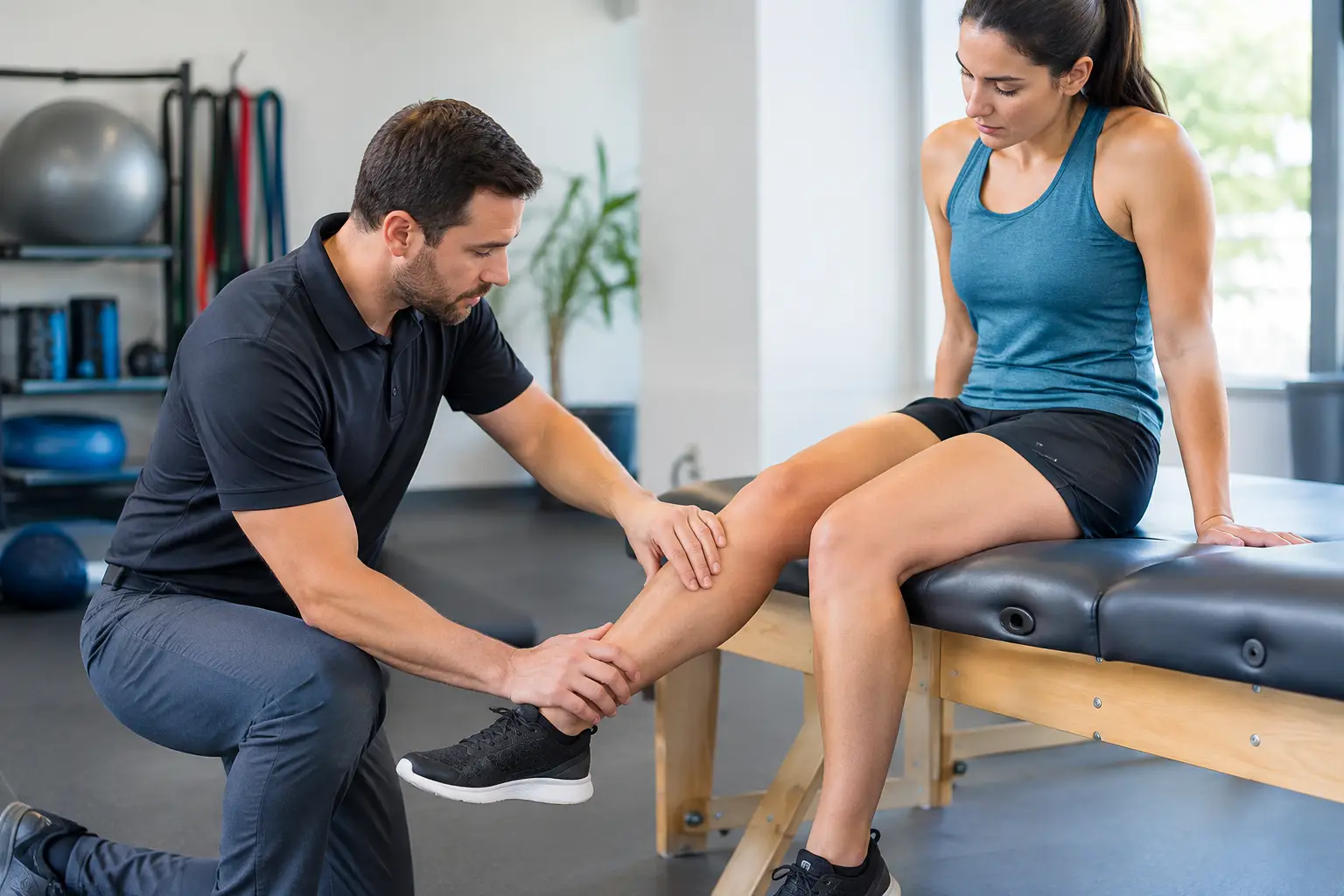
The physical examination may include palpation of the shin and calf, ankle and foot movement, calf strength and endurance, single-leg control, hopping tolerance when appropriate, and an assessment of how you squat, walk, or run. If the history or exam suggests a possible bone stress injury or another diagnosis outside conservative rehabilitation, referral for medical investigation may be appropriate.
This matters because a runner with diffuse, load-related shin tenderness needs a different plan than someone with a suspected stress fracture. A precise diagnosis is not always possible in one visit, but identifying the likely pain source and the relevant risk factors allows for safer decisions.
Treatment and return-to-running rehab
Treatment should calm an irritable problem while building the capacity that was missing when symptoms began. Hands-on care may be useful when calf or lower-leg stiffness is limiting movement or making exercise difficult to tolerate. Depending on the findings, this can include deep soft tissue treatment, joint mobilization, or instrument-assisted soft tissue therapy. These approaches are not meant to “break up” tissue or provide a standalone cure. Their role is to help reduce symptoms and improve movement so progressive rehabilitation can do its job.
Exercise rehabilitation usually focuses on gradually improving calf strength, soleus endurance, foot and ankle control, and the ability to tolerate single-leg loading. Hip and trunk strength may also be included when they are relevant to your running or landing mechanics. The right exercises depend on your current irritability. A runner who hurts with walking needs a different entry point than someone who only feels pain after 10 kilometres.
Progressive loading is the centre of recovery. You may begin with a reduced running dose, run-walk intervals, flatter terrain, or cross-training that does not provoke symptoms. As your shin tolerates more, volume and intensity can be added strategically. The sequence matters. Adding distance, hills, and speed all at once is a common way to recreate the original problem.
Shockwave therapy or Class IV laser therapy may be considered in select cases as part of a broader plan, particularly where symptoms have been stubborn. They are adjuncts, not replacements for load management, strength work, and a structured return to activity. The goal is not simply to get through the next run with less pain. It is to restore enough capacity that training, work, and sport stop feeling like a repeated gamble.
If your shin pain sounds familiar, book an assessment with Ground Up Rehab in Hamilton. A clear diagnosis, a realistic loading plan, and progressive rehab can help you return to running with more confidence than another cycle of resting until the ache fades.
