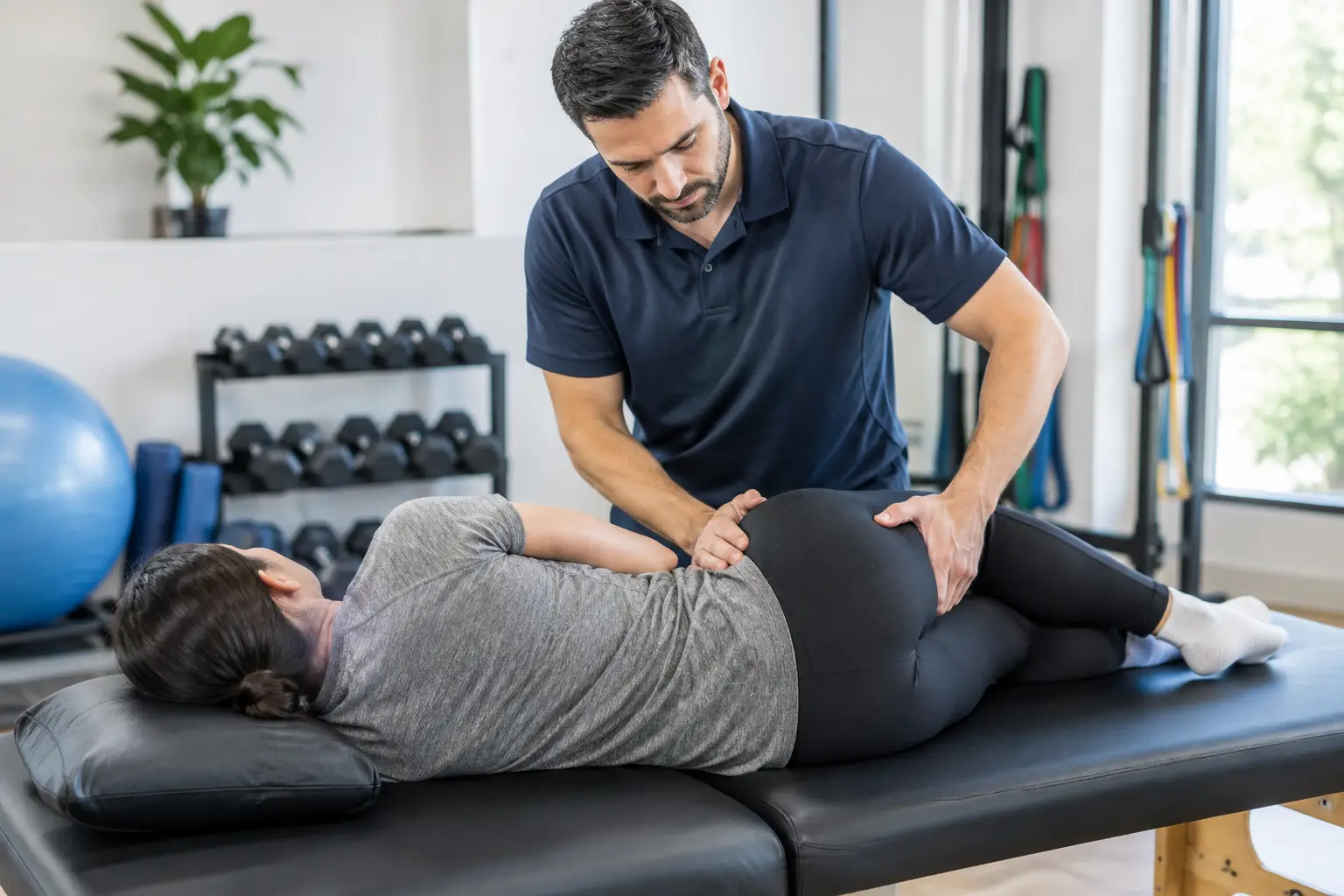
Sciatica leg pain is more than a sore back that travels a little farther than usual. It can feel like a sharp line of pain from the buttock into the thigh or calf, a burning sensation down the leg, pins and needles in the foot, or a leg that feels weak and unreliable when you walk, lift, or get up after sitting. For many people, the frustrating part is not only the pain. It is losing confidence in everyday movement, training, work, or sleep.
The good news is that sciatica is often manageable with the right assessment and a plan that matches your presentation. That does not mean every case needs the same stretch, adjustment, or exercise. Sciatic symptoms can come from different tissues and respond differently depending on what is sensitive, what movements provoke symptoms, and how long the problem has been present.
What sciatica leg pain actually means
Sciatica is a description of symptoms involving the sciatic nerve or one of the nerve roots that contribute to it. The sciatic nerve is the largest nerve in the body. It runs from the low back through the buttock and down the back of the leg, supplying sensation and muscle function to parts of the leg and foot.
People often use “sciatica” to describe any pain in the buttock or leg. True sciatic-type pain commonly travels below the knee and may be accompanied by tingling, numbness, altered sensation, or weakness. Low back pain can occur with it, but it does not have to. A deep ache in the buttock alone may be referred pain from the back, hip, or surrounding muscles rather than nerve-related pain.
That distinction matters because the treatment plan should fit the problem. The goal is not to chase a label based on one symptom. It is to identify the most likely pain driver, rule out concerns that need medical care, and build your ability to move and load the area again.
Common sciatica symptoms
Sciatica often affects one side, although symptoms can vary. You may notice pain that starts in the low back or buttock and travels into the back or side of the thigh, calf, ankle, or foot. The quality can range from a dull ache to electric, hot, stabbing, or shooting pain.
Sitting, bending forward, getting in and out of a car, coughing, lifting from the floor, or long drives can aggravate symptoms for some people. Others feel worse standing or walking, particularly if there is narrowing around the nerve in the lower back. Symptoms may come and go, or they may remain present at a lower level and flare sharply with specific movements.
Weakness is a more significant feature than pain alone. You may notice difficulty lifting the front of your foot, rising onto your toes, climbing stairs, or trusting one leg during a squat or step-down. These changes should be assessed rather than pushed through.
Why sciatica happens
A lumbar disc irritation or disc herniation is one common cause, particularly when symptoms begin after lifting, repeated bending, or a period of increased training or physical work. A disc can irritate a nearby nerve root through inflammation, mechanical pressure, or both. However, a scan finding does not automatically explain the pain. Many people have disc changes without symptoms, and scans must be interpreted alongside an examination.
Other potential contributors include age-related changes that reduce space around a nerve, irritation from joints in the low back, or sensitivity around the deep buttock and hip region. In some cases, leg symptoms may be influenced by multiple factors at once: a recent workload spike, reduced tolerance to sitting, guarded movement, poor sleep, and a nervous system that has become more protective after repeated flare-ups.
There is rarely one simple structural explanation. The more useful question is usually: which positions, movements, and loads are currently exceeding your tolerance, and how can we restore that tolerance without repeatedly provoking the leg?
When sciatica needs urgent medical attention
Most cases of sciatica are not emergencies, but certain symptoms need prompt medical assessment. Seek urgent care if you develop new loss of bowel or bladder control, numbness around the groin or saddle area, rapidly worsening leg weakness, severe pain following significant trauma, fever or unexplained illness with back pain, or a history of cancer combined with unexplained back and leg symptoms.
A non-urgent assessment is still worthwhile when pain travels below the knee, numbness or weakness persists, symptoms are worsening, sleep is consistently disrupted, or you are avoiding work, training, or normal daily tasks because you do not trust your back or leg. Waiting for pain to become unbearable is not a treatment strategy.
How sciatica leg pain is assessed
A useful assessment starts with the story behind the symptoms. When did they begin? Was there a clear trigger? Does sitting, walking, bending, coughing, or lifting change the leg pain? Has the location of symptoms shifted over time? These details help guide the examination.
At Ground Up Rehab, an assessment would typically look at low-back, hip, and leg movement; strength; reflexes where appropriate; sensation; and nerve-related tests. We also assess functional tasks that matter to you, whether that is getting through a shift in the trades, returning to deadlifts, running without symptoms, carrying a child, or sitting through a commute from Burlington or Stoney Creek.
Imaging is not required for every episode. It may be useful when symptoms are severe, not improving as expected, associated with meaningful neurological changes, or when a physician needs more information to guide next steps. For many people, the examination and symptom behaviour provide enough direction to begin conservative rehabilitation safely.
Treatment should reduce sensitivity and rebuild capacity
Early treatment is often about finding movements and positions that calm symptoms rather than forcing a generic stretching routine. Aggressive hamstring stretching, for example, can feel productive but may aggravate an irritable nerve in some presentations. Complete rest can also backfire, leaving you stiffer, less confident, and less tolerant of normal activity.
Hands-on care can be useful when it helps improve short-term movement, reduce guarding, or make rehabilitation more tolerable. Depending on the assessment, this may include joint mobilization or manipulation, deep soft tissue therapy, instrument-assisted soft tissue therapy, cupping, or Class IV laser therapy. These tools are not standalone fixes, and they should not be presented as such. Their value is in supporting the larger plan: helping you move, load, and function more comfortably while symptoms settle.
Medication, injections, or medical consultation may be appropriate in some cases, particularly when pain is highly irritable or progress stalls. A good rehab plan works alongside appropriate medical care when needed rather than treating it as an either-or choice.
Rehabilitation is where lasting progress is built
As symptoms become more manageable, rehabilitation shifts toward restoring capacity. That may begin with controlled spine and hip movement, walking tolerance, and low-threat positions that do not send symptoms farther down the leg. From there, the plan can progress to trunk endurance, hip and leg strength, lifting mechanics, carries, squatting patterns, and task-specific loading.
The right progression depends on your goal. A desk worker may need to rebuild tolerance for sitting, commuting, and repeated transitions from chair to standing. A runner may need gradual exposure to impact and single-leg loading. A lifter may need a structured return to hinging, bracing, and heavier pulls. The common thread is progressive loading: enough challenge to build resilience, not so much that every session creates a major flare-up.
Pain does not have to reach zero before you start moving. Mild, temporary symptoms can sometimes be acceptable during rehab if they settle quickly and do not create worsening pain, numbness, or weakness afterward. This is where individual guidance matters. The goal is not to fear every sensation, but to recognize when your body is adapting versus when you are repeatedly overloading an irritated system.
A practical next step
Sciatica can be disruptive, but it does not mean you are permanently fragile or that you need to stop doing everything you enjoy. A clear assessment can separate nerve-related leg pain from other common sources of buttock and leg symptoms, identify what is currently aggravating the problem, and map out a realistic return to activity.
If this sounds like what you are experiencing, book an assessment with Ground Up Rehab in Hamilton. The right plan should help you move forward with more confidence, not leave you dependent on temporary relief.
