That sharp first-step heel pain in the morning can make a normal walk to the kitchen feel like a problem. Effective plantar fasciitis treatment is not just about getting through the next few steps with less pain. It is about understanding why the foot has become sensitive, reducing aggravation without shutting life down, and rebuilding the capacity to walk, work, train, and run with confidence.
For many people, heel pain settles temporarily with rest, stretching, or a new pair of shoes, then returns as soon as activity picks up again. That pattern is frustrating, but it also tells us something useful: the foot may need more than short-term symptom management.
What plantar fasciitis actually is
Plantar fasciitis is one of the most common causes of pain under the heel. The plantar fascia is a strong band of connective tissue that runs from the heel toward the toes. It helps support the arch and transfer force through the foot when you stand, walk, run, jump, or push off the ground.
Despite the name, persistent plantar fasciitis is not always a straightforward inflammatory problem. In longer-lasting cases, it is often better understood as an irritated, overloaded tissue that is not tolerating current demands well. That distinction matters because simply trying to eliminate inflammation is rarely enough to build a durable return to activity.
Pain is usually felt at the inside-bottom edge of the heel. It may be sharp with the first few steps after getting out of bed or standing after sitting, then ease as you move around. It can also build during a long shift, after a run, or following time on hard floors.
Common signs of plantar fasciitis
The classic symptom is pain with first steps in the morning. However, plantar fasciitis can look different depending on the person and how long it has been present. Some people notice heel pain only after longer walks. Others can train through a workout but feel significantly worse later that day or the following morning.
The area may be tender when you press near the inside of the heel. Walking barefoot on tile or hardwood can be uncomfortable, and climbing stairs, carrying loads, or spending long hours on your feet may become more difficult. Runners may feel pain during push-off, while gym-goers often notice it with squats, lunges, deadlifts, or conditioning work that increases time on the forefoot.
Not every heel pain problem is plantar fasciitis. Pain at the back of the heel can involve the Achilles tendon, while nerve irritation, stress injuries, inflammatory conditions, or referred pain can create similar symptoms. An accurate assessment matters when symptoms are persistent, unusual, or limiting your activity.
Why heel pain develops
Plantar fasciitis rarely comes down to one cause. It is usually a capacity-versus-demand issue: the load going through the foot has increased beyond what the plantar fascia, calf, ankle, and surrounding muscles are currently prepared to handle.
This can happen after a sudden jump in running distance, a return to sport after time off, a new job with more standing or walking, or several busy weeks where recovery and training routines change. Tradespeople, nurses, warehouse workers, and parents who are constantly on their feet can develop heel pain without ever calling themselves athletes.
Footwear can contribute, particularly when a worn-out shoe no longer provides the support or comfort you need for long days. Foot structure can influence how force is distributed, but flat feet or high arches do not automatically mean someone will develop plantar fasciitis. Stiffness or reduced strength through the calf, ankle, foot, hip, and lower leg can also affect how well the body manages repetitive loading.
Sometimes the aggravating factor is obvious. Other times, it is a combination of smaller changes: more walking, less sleep, a return to lifting, a different work schedule, and a pair of old shoes all at once. The goal is not to blame every variable. It is to identify the ones that are most relevant to your symptoms and your life.
When plantar fasciitis should be assessed
Mild heel pain that improves quickly with sensible activity changes may not require extensive care. But it is worth getting assessed when pain has lasted more than a few weeks, keeps returning, changes how you walk, or stops you from working, exercising, or keeping up with family life.
You should seek timely medical assessment for severe swelling, redness, heat, fever, numbness, significant bruising, sudden inability to bear weight, or pain after a major injury. Those signs can point to something other than routine plantar fascia irritation.
A rehab assessment is also useful when you have already tried rest, generic stretches, massage, or online exercises but the pain keeps returning. More effort is not always the answer. The plan may simply need to match your actual activity demands more closely.
How plantar fasciitis is assessed
A useful assessment starts with your story. When does the pain occur? What changed before it started? Does it hurt with first steps, after sitting, during running, or only at the end of a shift? What activities do you need to return to?
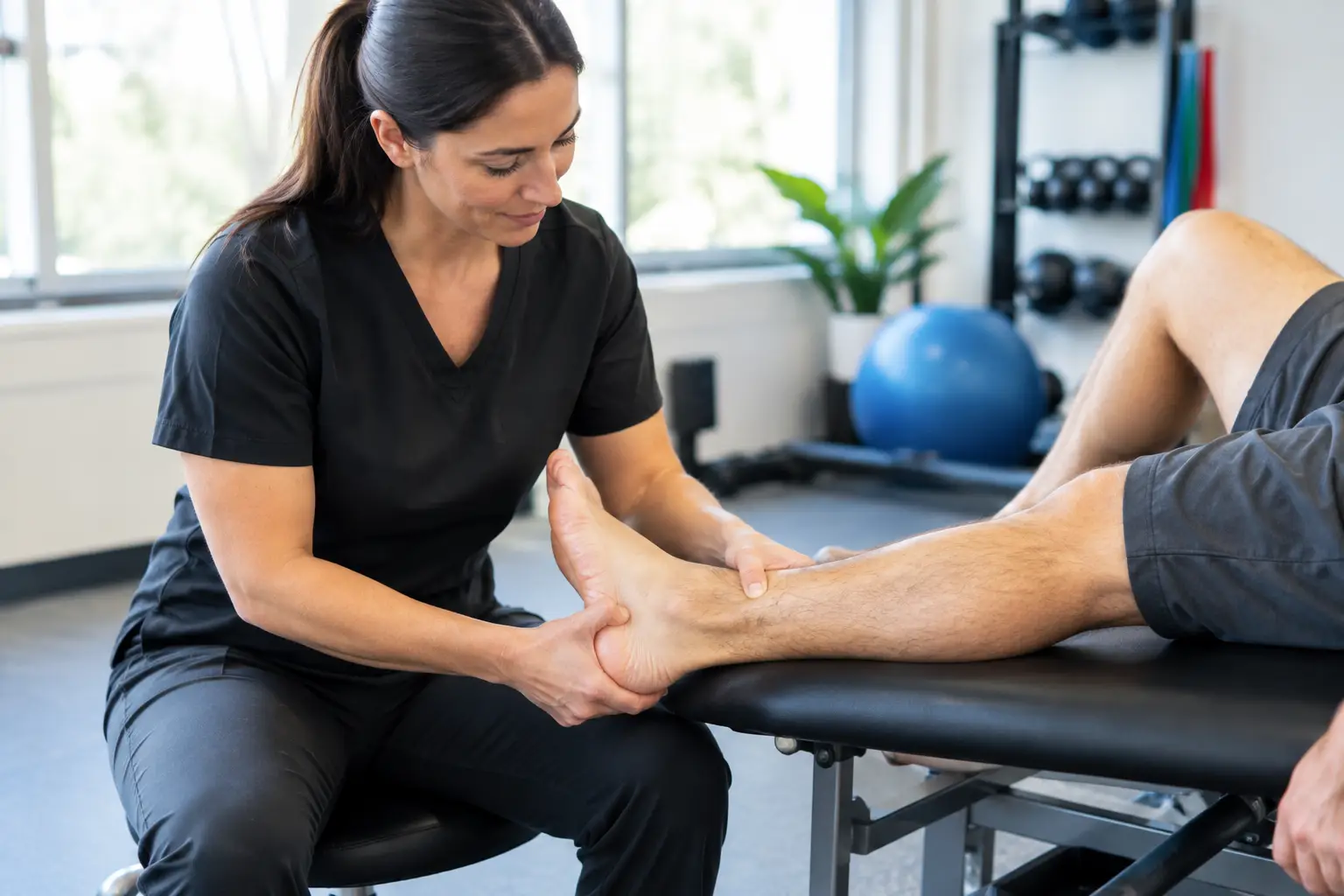
From there, a clinician will assess the location and behaviour of your symptoms, ankle and toe movement, calf strength and endurance, foot control, walking mechanics, and how your body responds to loading. They may also look at related areas such as the Achilles tendon, knee, hip, and lower back when the history suggests they are relevant.
The point is not to chase a perfect posture or find one body part to blame. It is to determine what is sensitive, what is underprepared, and what changes will help you keep moving while symptoms settle.
Plantar fasciitis treatment that goes beyond temporary relief
The right treatment plan depends on irritability, goals, work demands, training history, and how long the problem has been present. In the early phase, the priority may be reducing the specific loads that flare symptoms while maintaining as much normal activity as possible. For example, a runner may temporarily reduce hills or speed work, while someone on their feet all day may benefit from pacing changes and footwear adjustments.
Hands-on treatment can be useful when it helps improve short-term comfort and movement. Deep soft tissue therapy, joint mobilization, or instrument-assisted soft tissue work may be used around the calf, foot, and ankle when appropriate. These treatments are not designed to "break up" tissue or cure the condition in isolation. Their value is creating a better window to move, load, and rehabilitate.
For stubborn cases, shockwave therapy or Class IV laser therapy may be considered as part of a broader plan. Some people find these options help reduce pain and improve tolerance to rehabilitation, particularly when symptoms have persisted for months. They should support progressive loading, not replace it.
Supportive footwear, short-term inserts, or taping can also reduce symptoms for some people. These tools can be practical, especially during a demanding work week or a gradual return to walking and running. The trade-off is that external support does not automatically rebuild the foot and calf capacity needed for long-term resilience.
Rehabilitation means rebuilding load tolerance
A plantar fasciitis rehab plan should progress beyond stretching alone. Calf and plantar fascia mobility may matter, particularly if first-step pain is prominent, but stretching is only one tool. Lasting improvement usually requires progressive strengthening of the calf, foot, and lower leg, then gradual exposure to the activities that originally caused problems.
Early exercises may focus on controlled calf raises, foot-strength work, and comfortable loading through the arch. As tolerance improves, rehabilitation can progress to heavier calf loading, single-leg work, walking volume, stair tolerance, lifting, running drills, or sport-specific demands. The exact exercises matter less than having the right dose and progression.
Pain during rehab is not always a sign that damage is occurring. A small, manageable symptom response may be acceptable, especially if it settles quickly and does not lead to worse first-step pain the next morning. A sharp increase in pain, a limp, or a clear day-to-day decline means the load likely needs adjustment.
This is where generic online programs often fall short. They may include good exercises, but they cannot account for whether you are a Hamilton runner building back to a race, a tradesperson climbing ladders all day, or a parent trying to get through school drop-off without limping.
A practical approach at Ground Up Rehab
At Ground Up Rehab, plantar fasciitis care is built around a thorough assessment, meaningful hands-on treatment when it is useful, and a progressive plan that fits the demands of your work, training, and daily life. The objective is not to keep you dependent on passive treatment. It is to help you understand the problem, improve your capacity, and return to the activities that matter to you.
If your heel pain is affecting your first steps, your workouts, or your ability to get through a full day on your feet, book an assessment. A clear plan is often the difference between repeatedly managing plantar fasciitis and building a foot that is ready for more.
