Knee osteoarthritis pain is rarely just a problem with the knee itself. It often shows up when you squat to pick up a child, walk down the escarpment stairs, get out of a low car, or try to return to the gym after a flare-up. The frustrating part is that many people are told to simply rest, avoid impact, or accept that pain is inevitable because their joint has “wear and tear.” That advice can leave you less active, weaker, and more limited over time.
Osteoarthritis is common, especially as we get older, but it does not mean your knee is fragile or that activity is off the table. A good plan accounts for the joint, the surrounding muscles, your current capacity, and the specific activities you want to get back to.
What knee osteoarthritis is
Knee osteoarthritis is a condition involving changes to the joint over time. These changes can include cartilage thinning, changes in the bone near the joint, irritation of the joint lining, and reduced tolerance to certain loads. X-rays may show osteoarthritis even in people with little or no pain, while someone with modest imaging changes may have a very irritable knee. The scan is one piece of the picture, not a complete explanation for your symptoms.
Pain can fluctuate. You may have a few good weeks followed by a flare after a long hike, a busy shift on your feet, a new running routine, or a stretch of reduced activity followed by doing too much too soon. That variability is one reason treatment should not be based on imaging alone.
Common symptoms of knee osteoarthritis pain
Knee osteoarthritis pain is often felt around the front, inside, or back of the knee. It may be a deep ache, stiffness, soreness with loading, or a sharp pinch during a particular movement. Common complaints include pain with stairs, squatting, kneeling, prolonged walking, getting up from a chair, and standing after sitting for a while.
Some people notice swelling after activity, a reduced ability to fully bend or straighten the knee, clicking or grinding, or a sense that the leg is less reliable. Clicking by itself is not necessarily a concern. It matters more when it is paired with pain, swelling, locking, or a meaningful loss of function.
Symptoms can also affect confidence. If your knee has flared repeatedly, it makes sense to become cautious with stairs, lifting, running, or recreational sport. But avoiding every uncomfortable movement is not usually the long-term answer. The goal is to find the right starting level and build your tolerance from there.
Why symptoms flare up
There is no single cause of knee osteoarthritis pain. Age, previous knee injuries, family history, joint anatomy, body weight, occupational demands, and past activity exposure can all play a role. A history of ACL injury, meniscus injury, or knee surgery may increase the likelihood of osteoarthritis changes later on.
In day-to-day rehab, however, the more useful question is often: what is your knee currently able to tolerate? A flare can happen when demand rises faster than capacity. That may mean adding hills to your walks, returning to pickleball after months away, increasing squat volume at the gym, working several long shifts, or spending a weekend doing home projects.
Weakness is not the only factor, but reduced strength and endurance in the quadriceps, hamstrings, calves, hips, and trunk can make knee tasks feel harder. Limited ankle or hip mobility can also change how you move through stairs, squats, and lunges. These factors do not mean your body is “out of alignment.” They are simply useful, modifiable areas to assess.
When your knee should be assessed
An assessment is worthwhile when pain is limiting work, training, walking, sleep, or everyday tasks, or when flare-ups keep returning despite rest and generic exercises. It is also useful if you are unsure how much activity is safe. Many people stop moving because they do not have clear boundaries, then find that their tolerance declines further.
Seek timely medical assessment for a knee that is hot, red, significantly swollen, associated with fever or feeling unwell, or suddenly unable to bear weight after an injury. A knee that truly locks and cannot move, a suspected fracture, or a sudden calf swelling should also be assessed promptly. These situations need more than a routine rehab plan.
A better assessment than “just arthritis”
A thorough assessment looks beyond the diagnosis. At Ground Up Rehab, that means discussing when symptoms started, what a typical flare looks like, prior injuries, your work and training demands, and the activities that matter most to you. The goal is not to chase a perfect-looking knee. It is to identify the movements and loads that currently exceed your capacity and determine what can be improved.
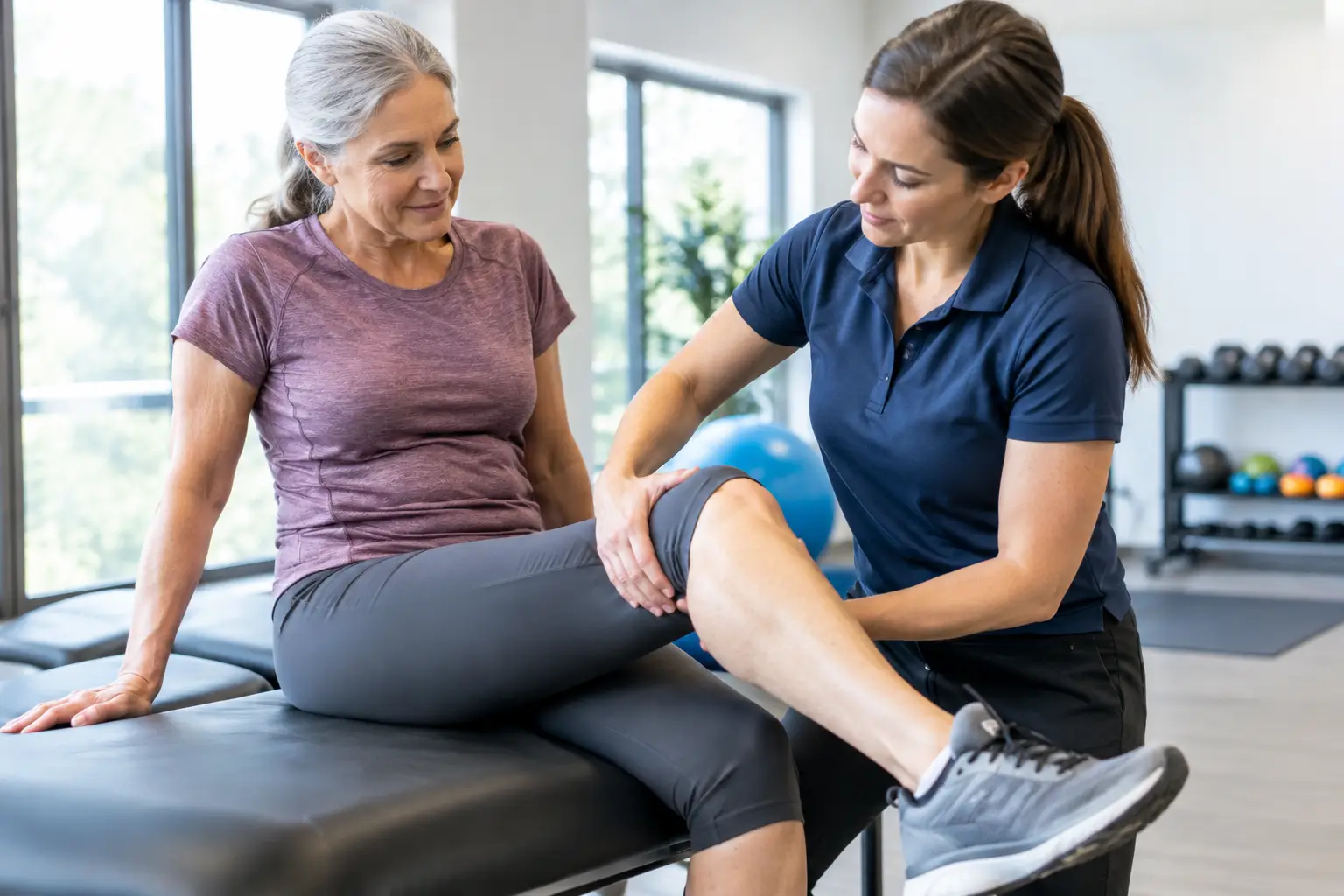
Your clinician may assess knee range of motion, swelling, joint irritability, strength, single-leg control, walking, stair tolerance, squat mechanics, hip and ankle contribution, and relevant functional tasks. If you are a runner, that may include running-related loading. If you work in the trades, it may include kneeling, carrying, climbing, and repeated transfers. Your rehabilitation should match your real life.
Imaging is sometimes useful, particularly after trauma or when symptoms do not fit a straightforward pattern. But it is not always required before starting conservative care. A clinical assessment helps determine whether imaging or a referral is appropriate.
Treatment for knee osteoarthritis pain
The foundation of treatment is progressive rehabilitation. Exercise is not about punishing the knee or forcing through severe pain. It is about giving the joint and surrounding tissues a manageable, repeatable dose of load so they can become more capable.
Early on, this may involve finding tolerable versions of movements such as sit-to-stands, step-ups, leg press, squats, split squats, calf raises, or cycling. The right selection depends on your symptoms, range of motion, confidence, and goals. Some discomfort during exercise can be acceptable, particularly if it stays manageable and settles back toward baseline within a reasonable period. A sharp increase in pain, major swelling, or symptoms that remain significantly worse for days means the plan likely needs adjusting.
Progression matters more than novelty. Once the knee tolerates a movement, resistance, range, volume, speed, or task complexity can be increased gradually. This is how rehab translates into better stair tolerance, longer walks, stronger gym sessions, and a more confident return to the activities you value.
Hands-on treatment may also have a role when stiffness, muscle guarding, or pain is making it hard to move and train. Joint mobilization, soft tissue therapy, or instrument-assisted soft tissue work may help create a useful window for movement in some cases. Class IV laser therapy or shockwave therapy may be considered for specific presentations, but neither is a standalone cure for knee osteoarthritis. Passive treatment should support an active plan, not replace it.
Managing activity without giving up what you enjoy
Complete rest is rarely necessary, but constantly testing the knee with high-demand activity is not a great strategy either. The better approach is to adjust the dose. A runner may temporarily reduce hills, distance, or frequency while building strength. A gym-goer may use a shallower squat range, slower tempo, or a different variation before loading deeper positions again. Someone whose knee hurts on long walks may break one long walk into shorter bouts while improving leg capacity.
This is not about avoiding impact forever. For some people with knee osteoarthritis, running, jumping, and recreational sport remain realistic goals. For others, lower-impact conditioning is a better fit during a more irritable phase. The answer depends on symptoms, recovery, goals, and how the knee responds over time.
Pain medication, injections, bracing, and medical management may also be appropriate for some people. These decisions are individual and should be discussed with the relevant healthcare provider. Rehab can work alongside medical care by giving you a clear way to restore strength and function rather than relying only on short-term symptom control.
Build a knee that does more
Knee osteoarthritis does not require you to stop being active or accept a shrinking list of things you can do. It does require a plan that respects your current symptoms while steadily rebuilding capacity. If knee pain is changing how you train, work, walk, or use stairs, book an assessment at Ground Up Rehab in Hamilton. You can get a clear picture of what is driving your flare-ups and a practical path back to moving with more confidence.
