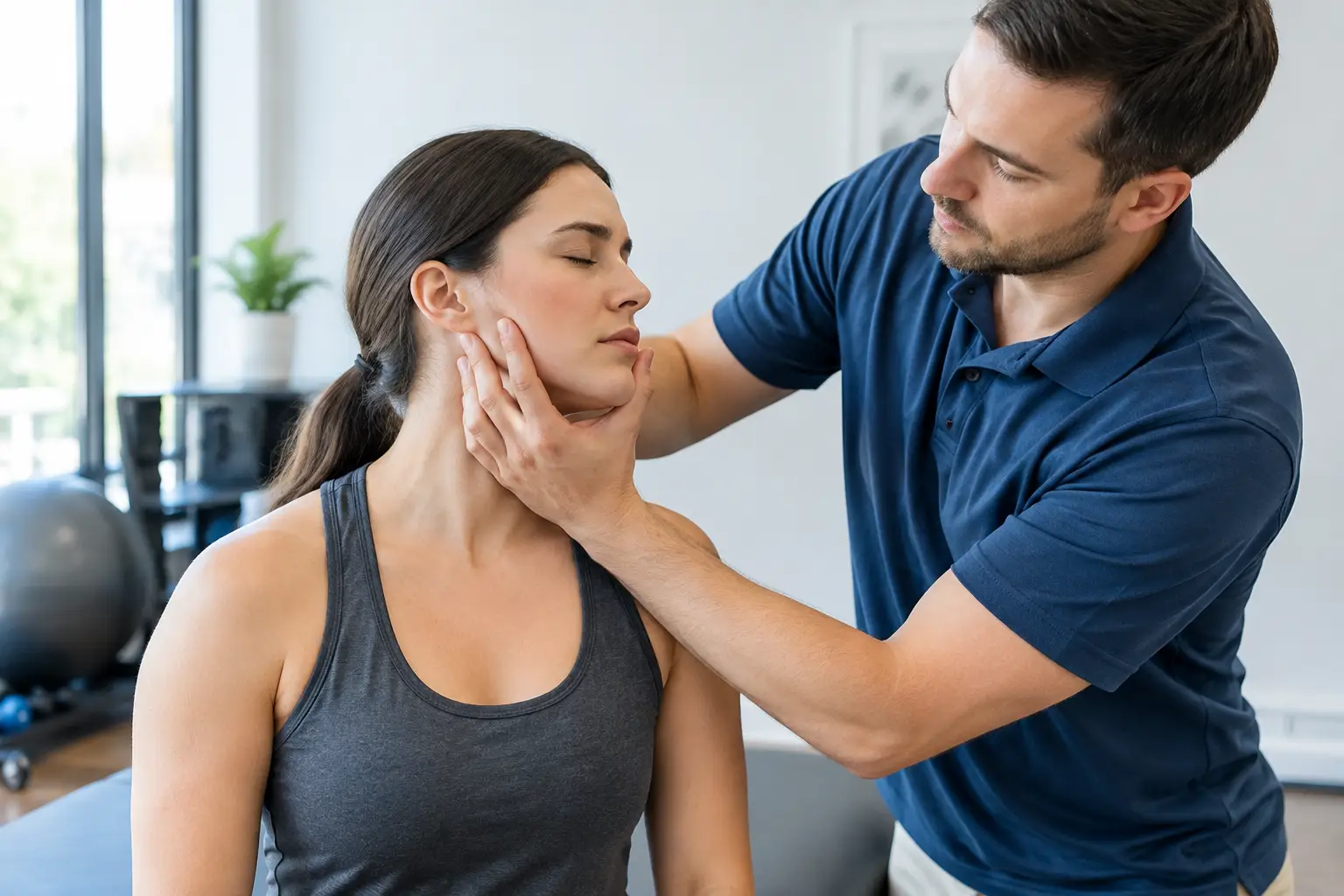
Jaw pain is rarely just an annoyance when chewing gum or opening wide for a bite. It can make meals uncomfortable, interrupt sleep, trigger headaches, and leave you avoiding conversations, workouts, or foods you normally enjoy. For some people, it starts after a dental appointment or a stressful stretch of clenching. For others, it builds gradually alongside neck tension, headaches, or a demanding training schedule.
The jaw is a highly active joint system. It has to open, close, slide, and control force thousands of times each day. When the joint, surrounding muscles, teeth, or related structures become irritated, the result can be pain, clicking, stiffness, or a feeling that the jaw is not moving normally.
What jaw pain can involve
Jaw pain is a symptom rather than one single diagnosis. A common musculoskeletal source is temporomandibular disorder, often shortened to TMD. This broad term describes pain or movement problems involving the temporomandibular joints, the chewing muscles, or both. These are the joints just in front of your ears that connect the lower jaw to the skull.
TMD can involve sensitive chewing muscles, reduced joint movement, irritation within the joint, or a disc that is not moving smoothly as the mouth opens and closes. A click or pop may occur with or without pain. Clicking alone is common and does not automatically require treatment. It becomes more relevant when it is painful, worsening, associated with locking, or limiting how far you can open your mouth.
Not all jaw symptoms come from the jaw joint. Tooth or gum problems, sinus issues, ear conditions, nerve-related pain, arthritis, trauma, and certain headaches can also refer pain into the face and jaw. That is why a proper assessment matters before assuming every sore jaw needs the same solution.
Common jaw pain symptoms
Symptoms vary. Some people feel a dull ache around the cheek or temple by the end of the day. Others have a sharp pain when biting into something firm, yawning, or opening wide at the dentist. Common patterns include pain in front of the ear, tenderness through the cheek or temple muscles, stiffness on waking, headaches, neck discomfort, and a sense of fatigue in the jaw after talking or chewing.
You may also notice reduced opening, deviation of the jaw to one side as you open, catching, clicking, popping, or occasional locking. A locked jaw may mean you cannot open fully, cannot close fully, or feel as though movement is briefly blocked before it releases.
Symptoms are not always constant. They often fluctuate with workload. A person may manage well for weeks, then experience a flare-up during a stressful work period, after poor sleep, following a long dental procedure, or when returning to heavy lifting and bracing after time away.
Why jaw pain develops
Most persistent jaw pain is not explained by one dramatic event. It is usually a capacity issue: the jaw system is being asked to handle more force, repetition, or tension than it currently tolerates.
Clenching and grinding can contribute, especially when they are frequent or forceful. Daytime clenching often happens during focused computer work, driving, lifting, or stressful situations. Night-time grinding may be associated with a sleep-related pattern and sometimes warrants discussion with a dentist or physician. The goal is not to blame stress for pain or suggest that you can simply relax your way out of it. It is to identify a meaningful contributor and build a plan around it.
Jaw symptoms can also follow direct trauma, such as a fall or impact during sport. Prolonged mouth opening during dental work, repetitive chewing, nail biting, or repeatedly testing the jaw by opening it wide can aggravate an already sensitive system. Neck pain and jaw pain can also overlap because the upper neck, head, and jaw share movement and pain-processing pathways.
For active adults, heavy bracing and breath-holding during lifts can reveal a clenching habit. Training is not automatically the problem, and stopping all activity is rarely the best long-term answer. But modifying a few aggravating variables while symptoms settle can make it easier to keep moving without repeatedly flaring the area.
When jaw pain should be assessed promptly
A musculoskeletal assessment can be useful when jaw symptoms persist beyond a couple of weeks, keep returning, reduce eating or speaking tolerance, or interfere with work, sleep, training, or social life. It is also reasonable to get help sooner if you have painful clicking, repeated locking, a clear loss of motion, or symptoms after trauma.
Some situations need dental or medical assessment rather than a rehabilitation-first approach. Seek prompt care for facial swelling, fever, drainage, a severe toothache, recent significant trauma, a bite that suddenly feels dramatically different, numbness or weakness in the face, unexplained weight loss, or pain in the jaw with chest pressure, shortness of breath, sweating, or nausea. These symptoms may point to something other than a routine jaw joint or muscle problem.
How jaw pain is assessed
A good assessment does more than identify whether the jaw is tender. It should clarify the pattern of your symptoms and what they mean for your day-to-day function. That includes when the pain started, whether there was injury or dental work involved, what movements provoke it, the presence of headache or neck symptoms, sleep and clenching patterns, and how it affects eating, talking, work, and exercise.
The physical exam may include jaw opening and side-to-side movement, movement quality, joint sounds, chewing muscle sensitivity, neck mobility, and the way your symptoms respond to gentle loading or movement. Your clinician may also consider whether a dental referral, medical follow-up, or imaging is appropriate. Imaging is not required for every painful jaw, but it can be useful when trauma, significant locking, suspected arthritis, or a more complex joint problem is involved.
The assessment should lead to a working plan, not just a label. Two people can both be told they have TMD but need very different approaches. One may mainly need help with irritable chewing muscles and daytime clenching. Another may need gradual work to restore comfortable opening after a locking episode. A third may need coordinated care with a dentist because tooth pain or bite concerns are part of the picture.
Treatment and rehabilitation for jaw pain
Early treatment often focuses on reducing irritability without making the jaw overly protected. This may mean temporarily choosing foods that do not require aggressive chewing, avoiding repeated extreme opening, and reducing behaviours such as gum chewing or resting the chin in the hand. These are short-term adjustments, not permanent restrictions.
Hands-on treatment can be helpful when it improves comfort and makes movement or exercise more tolerable. Depending on the findings, this may include targeted soft tissue work for the jaw and neck muscles, gentle joint mobilization, and treatment of related neck restrictions. These approaches are tools, not standalone cures. Their value is in helping you move forward with an active plan.
Rehabilitation should then build capacity. The right exercises depend on the presentation, but may include controlled jaw opening, coordination work, low-load isometric work, and progressive exposure to the movements or foods that currently provoke symptoms. Neck and upper-body rehabilitation may also be relevant when those areas are contributing to the overall pattern.
Progression matters. If opening is limited, forcing a large stretch can aggravate a sensitive joint. If chewing tolerance is low, jumping straight back to tough foods can create a flare-up. The better approach is enough challenge to improve tolerance, with adjustments based on how symptoms respond over the next day or two.
A practical approach at Ground Up Rehab
At Ground Up Rehab in Hamilton, jaw pain care starts with figuring out what is actually driving the limitation. That may include the jaw joint, chewing muscles, neck, training habits, clenching patterns, or a need for dental or medical co-management. Meaningful hands-on care can help settle symptoms, but it is paired with a progressive rehabilitation plan built around your actual goals.
That might mean eating comfortably, getting through a full workday without temple headaches, returning to heavy lifting without constant bracing-related tension, or simply being able to yawn and laugh without guarding your jaw. The plan should change as your tolerance improves, rather than keeping you dependent on passive treatment.
If your jaw pain is limiting meals, sleep, training, or normal conversation, book an assessment. A clear diagnosis is not always immediate, but a focused evaluation can help you understand the next useful step and start moving with more confidence.
