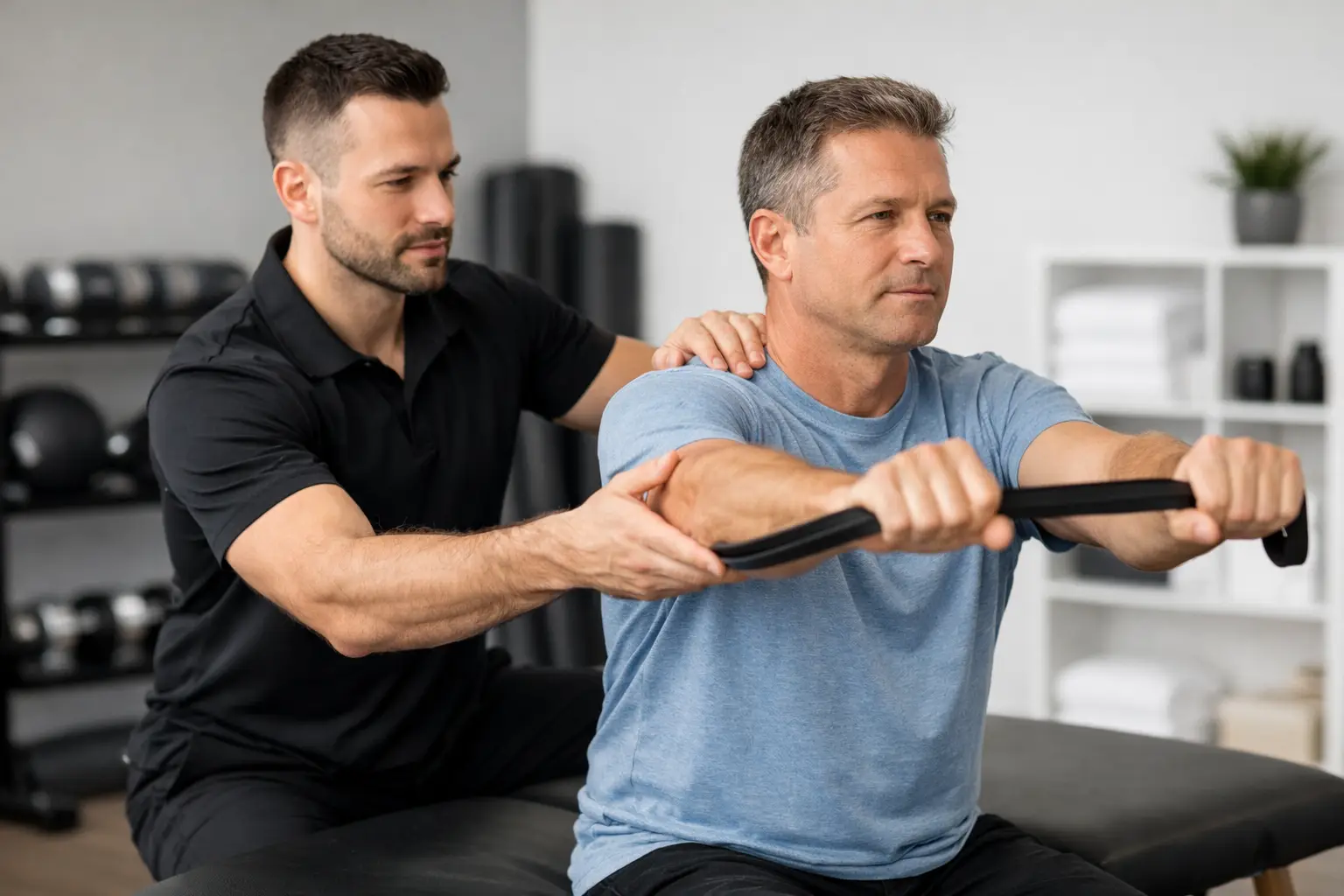
Most people do not struggle because they have not tried hard enough. They struggle because they have tried a little bit of everything and still do not have a plan that makes sense. If you are wondering how to choose rehab clinic care that actually helps, start by looking beyond who can get you in fastest or who offers the most treatment options on paper.
A good rehab clinic should help you understand why you are in pain, what is limiting your movement, and what the path back to training, work, sport, or normal daily life looks like. That matters whether you are a runner with recurring calf tightness, a lifter dealing with shoulder pain, or a desk worker whose back keeps flaring up every few weeks.
How to choose rehab clinic care with the right approach
The first thing to look at is the clinic's treatment philosophy. Some clinics are built around short visits and passive care. That can help with symptom relief, especially early on, but symptom relief alone is not the same as recovery.
If your pain keeps coming back, there is usually more to address than the sore spot itself. You may need a better movement assessment, a clearer explanation of what is contributing to the issue, and a progression that builds strength, tolerance, and confidence over time.
That does not mean every appointment needs to look like a workout, and it does not mean hands-on treatment has no value. It means the clinic should know when to use chiropractic care, physiotherapy, massage therapy, soft tissue work, joint mobilization, adjustments, shockwave therapy, Class IV laser therapy, cupping, or mobility work - and when those tools need to be paired with progressive rehab.
The strongest clinics do not treat techniques like the whole plan. They use them as part of a bigger process.
Look for assessment before treatment
A clinic should not jump straight into a generic plan after a two-minute conversation. A solid first assessment usually includes questions about your symptoms, training or work demands, injury history, lifestyle, goals, and what you have already tried. It should also include a physical evaluation of how you move, where you are limited, and what seems to aggravate or ease the problem.
This is especially important for active adults. If you squat, run, golf, lift, sit for long hours, or chase kids around all day, your rehab plan should reflect those real demands. The goal is not just to calm things down on the table. The goal is to help your body tolerate the things you actually need and want to do.
If the assessment feels rushed or overly scripted, that is worth paying attention to. Good rehab starts with understanding the person in front of you, not forcing every patient into the same template.
The plan should feel specific, not generic
After the assessment, you should leave with more clarity than you came in with. Not a guaranteed outcome, and not a dramatic promise, but a realistic explanation of what may be going on and what the next phase should look like.
That might include reducing irritation first, restoring mobility where needed, improving control, and then building strength so you can return to full activity. For someone else, the first step might be load management, technique changes, or a more gradual return to impact.
Different problems need different timelines. A clinic that treats every case the same way usually misses that.
What to ask before you book
You do not need to interrogate the front desk, but a few simple questions can save you time. Ask what the initial assessment includes. Ask whether treatment plans are individualized. Ask whether the clinic offers exercise-based rehab, not just passive treatment. If you are an athlete or active adult, ask whether they help people return to lifting, running, sport, or performance-based goals.
You can also ask who you will be working with and whether care is one-on-one. That matters. Rehab is hard to personalize when a provider is bouncing between multiple patients and handing out the same sheet of exercises to everyone.
It is also reasonable to ask how the clinic decides which treatments to use. You want to hear something thoughtful, not a canned answer built around one favourite tool.
Do not choose based on credentials alone
Credentials matter, but they are not the whole story. A chiropractor, physiotherapist, or registered massage therapist can all play a valuable role in recovery. What matters more is how they assess, how they reason through your case, and whether the clinic works from a rehab-focused model instead of a symptom-only model.
For example, chiropractic care can be useful for pain relief, mobility, and hands-on treatment when it fits the person and the problem. Physiotherapy can help guide recovery through movement assessment, rehab progressions, and return-to-function planning. Massage therapy can help manage tone, stiffness, and tissue sensitivity. None of those services should be treated like magic. They are most effective when they are integrated into a bigger plan.
That is one reason a multidisciplinary setting can be helpful. If the clinic combines hands-on care with movement assessment and strength-based rehab, you are more likely to get a plan that matches the full picture.
A rehab clinic should prepare you for real life
One of the biggest gaps in rehab is the jump from feeling a bit better to actually being ready. Ready to deadlift again. Ready to sit through a long workday. Ready to play hockey, carry your toddler, or train four times a week without worrying about the next flare-up.
That is where progressive rehab matters. A clinic should not just help you feel less pain in the short term. It should help you build capacity.
Capacity means your body can handle more without breaking down as easily. That might involve improving hip strength for a runner with knee pain, rebuilding trunk control for someone with recurring back issues, or loading a shoulder gradually so pressing movements stop feeling unpredictable.
If a clinic never moves beyond passive treatment, there is a good chance your progress stalls once symptoms settle a bit. Feeling better is part of the goal. Being more resilient is the bigger one.
Gym space is not a luxury if function matters
Not every injury needs advanced training, but for many active people, rehab should eventually look more like preparation than protection. A clinic with dedicated exercise space can bridge that gap.
That matters because bodyweight drills and band exercises are not always enough to get someone back to squatting, sprinting, field sports, or physically demanding work. At some point, rehab needs progression. It needs load. It needs movement that resembles real life.
For active adults in Hamilton and surrounding areas, that style of care often makes more sense than bouncing between short appointments that never fully connect the dots.
Signs you may need a more complete rehab model
If you have already tried rest, occasional massage, YouTube mobility drills, quick adjustments, or generic rehab sheets and you keep ending up in the same place, it may be time to look for a clinic that takes a more complete approach.
That does not mean your previous care was wrong. It may simply mean it was incomplete for what you needed. Some cases respond well to short-term symptom relief. Others need more structure, more progression, and more attention to movement quality, strength, workload, and recovery habits.
A better clinic experience often feels less like chasing pain and more like building a plan. You understand what you are working on. You know why the treatment is being used. You can see how today's session connects to next week's goals.
That is the difference many people are really looking for.
How to choose rehab clinic care without overcomplicating it
You do not need the flashiest website or the longest service menu. You need a clinic that listens, assesses properly, explains things clearly, and gives you a path that matches your goals.
The right clinic should make you feel like more than a sore shoulder, a cranky back, or a stubborn knee. It should treat you like a whole person with a real schedule, real stress, and real activities you want to get back to.
At Ground Up Chiropractic and Rehab, that means combining detailed assessment, hands-on care, chiropractic treatment, physiotherapy, massage therapy, and strength-based rehab in a way that fits the individual - not forcing everyone into the same plan.
If you are choosing a rehab clinic, look for one that helps you move forward with purpose, not just feel temporarily patched up. The best care is not about doing more treatment for the sake of it. It is about doing the right things, in the right order, so you can get back to living, training, and moving with more confidence.
