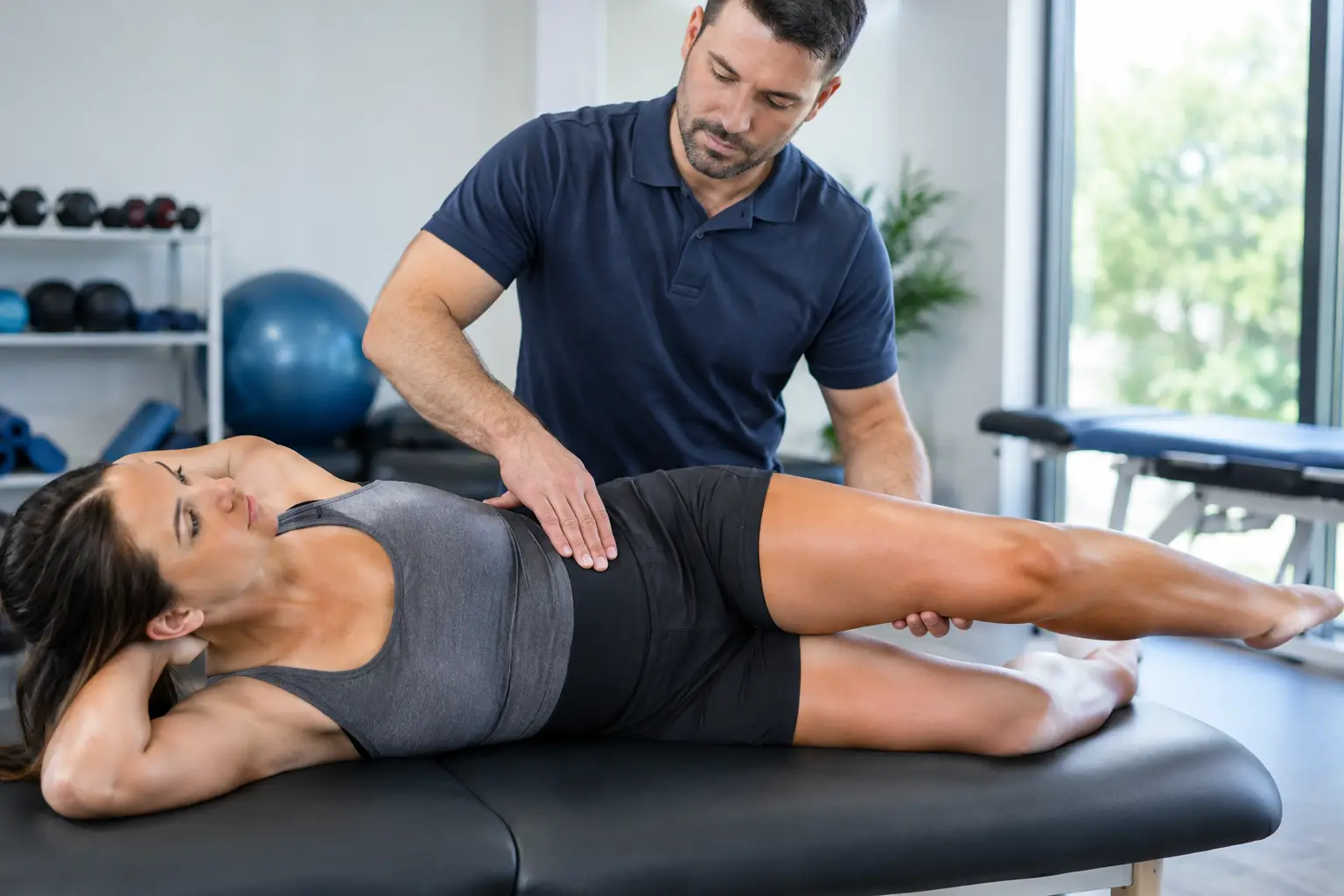
A deep ache at the front of the hip after squatting, running, or sitting through a long workday is easy to dismiss at first. But when the same movement repeatedly creates a sharp pinch, catching sensation, or loss of depth, it is worth paying attention. Hip impingement signs can point to irritation involving the hip joint and surrounding tissues, especially when they start limiting training, work, sport, or everyday movement.
Hip pain is not always hip impingement, and a structural finding on an X-ray or MRI does not automatically explain a person’s symptoms. The useful question is not simply, “Do I have impingement?” It is: which positions and loads are provoking your pain, what is your hip currently able to tolerate, and what needs to change to get you moving confidently again?
What is hip impingement?
Hip impingement, often called femoroacetabular impingement (FAI), describes a situation where certain hip positions bring the ball and socket of the hip joint into contact earlier or more forcefully than they ideally should. This may irritate structures at the front of the joint, including the labrum, cartilage, joint capsule, or nearby muscles and tendons.
There are different bony shapes associated with FAI. A cam shape involves extra bone around the top of the thigh bone, while a pincer shape relates to the rim of the socket. Some people have a combination of both. These shapes are common, including in people with no pain at all. That is why an image alone cannot diagnose the source of your symptoms or determine what treatment you need.
For many active adults, the problem is less about a hip being “bad” and more about a mismatch between the demands placed on it and its current capacity. Deep hip flexion, rotation, repetitive impact, heavy loading, or a sudden increase in training volume can expose that mismatch.
Common hip impingement signs
The most familiar symptom is pain or a pinching sensation in the front of the hip or groin. People often point to it with a C-shaped hand around the front and side of the hip. It may appear during a deep squat, getting out of a low car, tying shoes, sitting low on the couch, or lifting the knee toward the chest.
Symptoms can also spread into the upper thigh, outer hip, buttock, or lower back. That does not necessarily mean the hip is the only source of the problem. The lumbar spine, pelvic region, tendons, and other structures can refer pain around the hip, which is why a proper assessment matters.
Other possible signs include a painful click, catching, stiffness, reduced squat depth, or a sense that the hip is blocked at the bottom of a movement. Clicking on its own is common and is not automatically concerning. It becomes more relevant when it is painful, consistent, or paired with a loss of function.
Patterns that commonly aggravate symptoms
Hip impingement-related pain often shows up in positions that combine hip flexion, inward rotation, and moving the knee toward the midline. Deep squats, lunges, cycling, rowing, hockey, martial arts, and prolonged sitting can all be provocative for some people.
For lifters, symptoms may build when squat depth, volume, load, or frequency changes too quickly. For runners, hills, speed work, a recent jump in mileage, or reduced recovery can contribute. Desk workers may notice stiffness after sitting, then pain as they stand, walk, or train later in the day.
That does not mean these activities are inherently harmful or need to be abandoned. It means they may need to be temporarily modified while capacity is rebuilt. A person who cannot tolerate a below-parallel back squat right now may still be able to train productively with a box squat, split squat variation, adjusted range, different stance, or a more manageable load.
Why hip impingement symptoms develop
Bony hip shape can be one contributor, but it is rarely the whole story. Symptoms often develop after a change in activity rather than from one specific event. A new gym program, more running, returning to a sport league, a physically demanding work period, or trying to push through a previous flare-up can all increase joint and tissue demand.
Movement options also matter. If the hip has limited usable motion, poor control under fatigue, or reduced strength through the glutes, trunk, and legs, the same task may become more irritating. This is not about chasing perfect form or blaming posture. It is about identifying the positions, loads, and capacities that are relevant to your actual goals.
Age and other hip conditions can influence the picture too. Hip osteoarthritis, labral irritation, tendinopathy around the hip, lumbar referral, and groin-related athletic pain can overlap with hip impingement signs. The label should guide the assessment, not replace it.
When hip pain should be assessed
Arrange an assessment if hip or groin pain persists beyond a couple of weeks, repeatedly returns when you resume training, affects your walking or sleep, or stops you from doing movements that matter to you. Earlier assessment is especially useful when you have tried resting, stretching, generic mobility drills, or reducing activity but the pain returns as soon as you load the hip again.
Some symptoms need more urgent medical attention. Seek prompt care for severe pain after a fall or injury, an inability to bear weight, fever or feeling unwell with hip pain, a hot swollen joint, unexplained weight loss, numbness or weakness that is progressing, or new bowel or bladder changes. These signs are not typical of routine hip impingement-related pain.
How hip impingement is assessed
A useful assessment starts with the pattern, not a checklist of tests. Your clinician should ask where the pain is, how it began, which movements reproduce it, what training or work demands you have, and what you need to return to.
The physical exam may include hip range of motion, strength, gait, squat and lunge patterns, single-leg control, and selected tests that load the hip joint. No single test can prove hip impingement. The goal is to see whether your symptoms are likely coming from the hip, how irritable they are, and which factors can be changed.
Imaging is sometimes appropriate, particularly after significant trauma, with persistent symptoms, or when the findings would change the plan. It is not always the first step. Many people can begin a well-structured rehabilitation plan based on a thorough clinical assessment.
Treatment should match the problem in front of you
The first stage is often about settling symptoms without shutting down your life. That may mean reducing the depth, load, volume, or frequency of painful movements for a short period while maintaining the activities you can tolerate. Complete rest can be useful briefly after a flare-up, but it rarely builds the capacity needed for a lasting return to activity.
Hands-on care can help reduce sensitivity and improve short-term movement tolerance when it is paired with active rehabilitation. Depending on the assessment, this may include joint mobilization, deep soft tissue treatment, or instrument-assisted soft tissue therapy. These treatments are not meant to force a hip back into place or erase a structural shape. They are tools that may make it easier to move and train while the larger rehabilitation plan does the long-term work.
Building strength and tolerance again
Rehabilitation should progress from what your hip can do now to what your life demands later. Early exercise may focus on comfortable hip motion, isometric or controlled strength work, and finding lower-body patterns that do not produce a significant flare-up. As symptoms settle, the program should build strength through the glutes, quadriceps, hamstrings, trunk, and hip rotators.
Progressive loading is the key. A runner may need a staged return to hills and speed. A lifter may need to build from tolerable squat variations toward deeper ranges and heavier loads. A tradesperson may need capacity for climbing, carrying, kneeling, and getting in and out of vehicles. The right plan is specific because the goal is specific.
Some people improve significantly with non-surgical care and smarter load management. Others may need further medical or orthopedic input if pain remains highly limiting despite a consistent, well-executed rehabilitation program. That decision should be based on symptoms, function, goals, and clinical findings - not imaging language alone.
A practical approach at Ground Up Rehab
At Ground Up Rehab in Hamilton, the focus is on identifying what is driving your hip symptoms and building a plan that fits your actual routine. That includes meaningful hands-on treatment when it helps, but it does not stop there. The goal is to restore usable movement, increase strength and load tolerance, and give you a clear path back to the gym, running route, job, sport, or daily activities you have been avoiding.
If hip impingement signs sound like what you are experiencing, book an assessment before another training block or work week turns a manageable problem into a recurring limitation. A clear plan can help you keep moving while building a hip that is better prepared for the demands you want to place on it.
