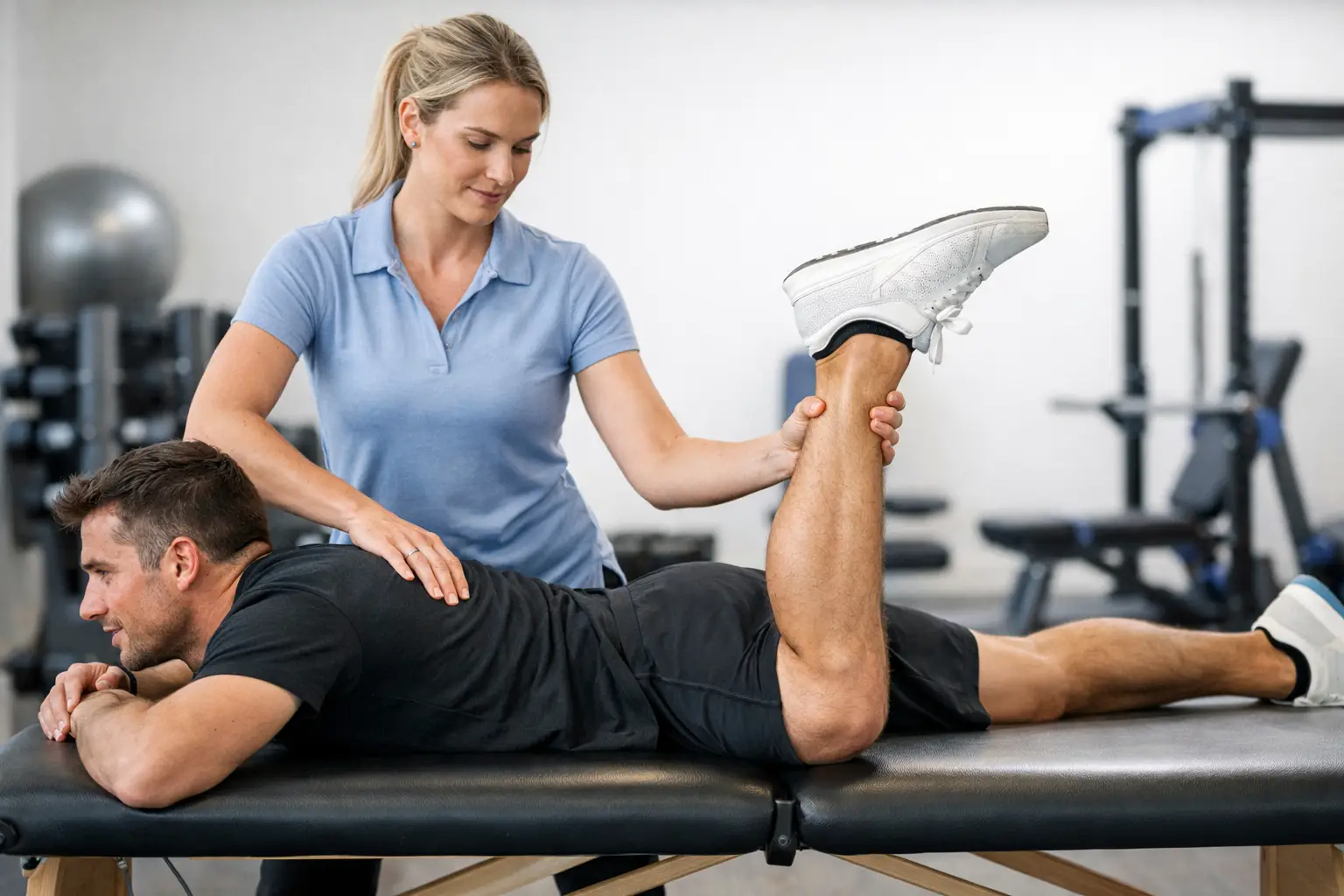
A hamstring strain can feel like a sudden grab, pop, or sharp pull in the back of the thigh - often during a sprint, a quick change of direction, a deadlift, or even a simple reach for the floor. A realistic hamstring strain rehab timeline is not just about waiting for pain to disappear. It is about rebuilding the muscle's capacity to lengthen, produce force, and handle the demands that caused the injury in the first place.
What is a hamstring strain?
The hamstrings are a group of three muscles that run along the back of the thigh, from the pelvis to below the knee. They help bend the knee, extend the hip, control your leg during running, and contribute heavily to jumping, hinging, and decelerating.
A strain occurs when hamstring muscle fibres or the tendon area are overloaded beyond their current capacity. This can range from a mild irritation with tightness and tenderness to a more substantial tear that causes bruising, weakness, and difficulty walking.
People often describe a hamstring strain as a "pulled hamstring," but the location matters. Pain high near the sit bone can behave differently from pain in the middle of the thigh or near the knee. A higher hamstring injury may be more sensitive with sitting and deep hip flexion, while a mid-thigh strain is often more obvious during sprinting or fast running.
Symptoms that fit a hamstring strain
Symptoms can vary with the severity and location of the injury. Common signs include sudden pain at the back of the thigh, pain when walking quickly or climbing stairs, tenderness to touch, weakness when bending the knee, and discomfort when lengthening the hamstring. Bruising or swelling can occur after a more significant injury.
Pain is not always immediate. Some people finish a game, workout, or shift before stiffness builds over the next several hours. Others feel an instant sharp pull and cannot continue. Neither experience tells you the full severity on its own.
A strain is more likely when symptoms began during a clear loading event. However, posterior thigh pain can also come from the low back, hip, sciatic nerve, or a tendon problem. That is one reason a proper assessment matters, particularly if the pain keeps returning.
Why hamstring strains happen
Hamstrings are commonly injured when they are forced to work hard while lengthening. Sprinting is the classic example: the hamstring must control the leg at high speed just before the foot contacts the ground. But strains also happen with kicking, lunging, slipping, deadlifting, picking something up awkwardly, and sudden acceleration at work or in sport.
A strain is rarely explained by one factor alone. Previous hamstring injury, a rapid jump in running volume, fatigue, reduced tolerance to sprinting, poor trunk or pelvic control under load, and returning to sport before regaining strength can all contribute. For gym-goers, the issue may be a sudden increase in Romanian deadlift load or range. For runners, it may be adding speed work after a winter of easier mileage.
Stretching alone does not solve this problem. A hamstring needs enough strength and exposure to the positions and speeds your activity demands.
Hamstring strain rehab timeline: what to expect
Timelines are estimates, not clearance dates. A mild strain may improve enough for a gradual return to running within two to four weeks. Moderate strains commonly need four to eight weeks, sometimes longer. A more significant tear, tendon involvement, repeated strain, or high-demand sport can extend rehabilitation well beyond that.
The right question is not, "What week am I in?" It is, "What can my hamstring tolerate today, and what does it need to tolerate next?" Progress should be based on symptoms, movement quality, strength, and sport or work demands.
First 1-7 days: settle symptoms without shutting down
Early on, the goal is to reduce aggravation while maintaining as much comfortable movement as possible. Complete rest can leave the hamstring deconditioned quickly, but forcing aggressive stretching, deep hinging, or fast running too soon can keep the area irritable.
Walking may need to be shortened temporarily if it causes limping. Gentle pain-limited knee bending, hip movement, and low-level hamstring isometrics can often begin early. Isometric work means contracting the muscle without moving much, such as lightly pressing your heel into the floor. The load should feel manageable, not like a test of toughness.
If there is substantial bruising, a noticeable dent in the muscle, severe weakness, inability to walk normally, or pain high at the pelvis after a forceful event, seek prompt assessment. Sudden calf swelling, unexplained warmth, chest pain, or shortness of breath require urgent medical attention.
Weeks 1-3: restore range and basic strength
As walking and daily movement become easier, rehabilitation shifts toward restoring comfortable range of motion and building strength through controlled movement. This may include bridges, hamstring curls, hip hinges with a limited range, split-stance work, and gradual exposure to longer muscle lengths.
This phase is where many people get impatient. Being able to walk without pain does not mean the hamstring is ready for a hard leg day, a Saturday soccer match, or hill sprints. The muscle may feel fine at low speed but still lack the strength to control fast, long-stride movements.
Some discomfort during rehab can be acceptable, especially mild muscular effort or temporary awareness of the injured area. Sharp pain, a sudden grab, worsening limp, or symptoms that remain significantly worse the next day are signs that the dose was likely too high.
Weeks 3-6: build capacity for real-life demands
Once basic movement is comfortable, loading becomes more deliberate. The focus moves toward heavier hip-dominant strength work, knee-flexion strength, single-leg control, and exercises that challenge the hamstring at longer lengths. Depending on the person and injury, this may include progressively loaded Romanian deadlifts, sliders, machine curls, split squats, and eccentric hamstring work.
Eccentric training means the hamstring is working while lengthening. It is valuable because strains often happen in that exact situation. However, it must be introduced at the right dose. High-volume eccentric exercises can create substantial soreness, so they are not automatically appropriate in the first few days after an injury.
For runners and field-sport athletes, this stage also includes a graded return to running. That usually starts with easy, controlled running and progresses through faster running, acceleration, deceleration, and eventually near-maximal sprinting. A recreational runner may not need repeated all-out sprints, while a soccer player or tactical worker may need them before returning with confidence.
Weeks 6 and beyond: return to sport, training, or work
The final stage is not simply repeating a few rehab exercises. It is practice for the activity that matters to you. A return to heavy lifting should include progressively challenging hinge patterns, volume tolerance, and confidence at the ranges used in training. A return to running should include the speed, terrain, distance, and fatigue demands that previously triggered symptoms.
For court and field sports, the hamstring must tolerate sprinting, cutting, kicking, and reacting when tired. For a tradesperson, it may need to handle ladders, repeated bending, carrying, and awkward positions. The final timeline depends on these demands.
A clinician may use side-to-side strength, range of motion, repeated movement testing, running progressions, and task-specific drills to guide the return. There is no single test that guarantees reinjury will not happen, but returning only when the hamstring has rebuilt meaningful capacity reduces the risk of repeating the same cycle.
How hamstring strain rehabilitation is assessed and treated
A useful assessment looks beyond where the thigh hurts. It should consider how the injury happened, your previous injury history, your walking and running mechanics where relevant, hip and low-back contribution, range of motion, hamstring strength, and the exact tasks you need to return to.
Hands-on treatment can help reduce pain and improve tolerance to movement in the early stages. Depending on your presentation, this may include deep soft tissue therapy, Graston or instrument-assisted soft tissue therapy, cupping, joint treatment, or Class IV laser therapy. These tools are not a substitute for loading the hamstring. Their role is to support the rehabilitation process when they help you move and train more effectively.
Progressive loading is the centre of recovery. The plan should change as your symptoms and capacity change, rather than keeping you on the same generic band exercises for weeks.
When recurring hamstring strains need a closer look
A hamstring that keeps "tweaking" often has not been fully prepared for the speed, load, or range required. Sometimes the previous rehab settled pain but did not rebuild high-speed strength. In other cases, training load rose too quickly, the injury was actually higher near the tendon, or symptoms are being influenced by the lumbar spine or neural sensitivity.
If you have strained the same hamstring more than once, cannot return to full stride without hesitation, or feel stuck despite rest and stretching, an assessment can clarify what is being missed.
At Ground Up Rehab in Hamilton, care is built around a thorough assessment, meaningful hands-on treatment when appropriate, and a progressive plan that gets you back to training, sport, work, and daily life with more confidence. If this sounds like the hamstring problem you are dealing with, book an assessment and give the injury a plan that matches the demands you want to return to.
