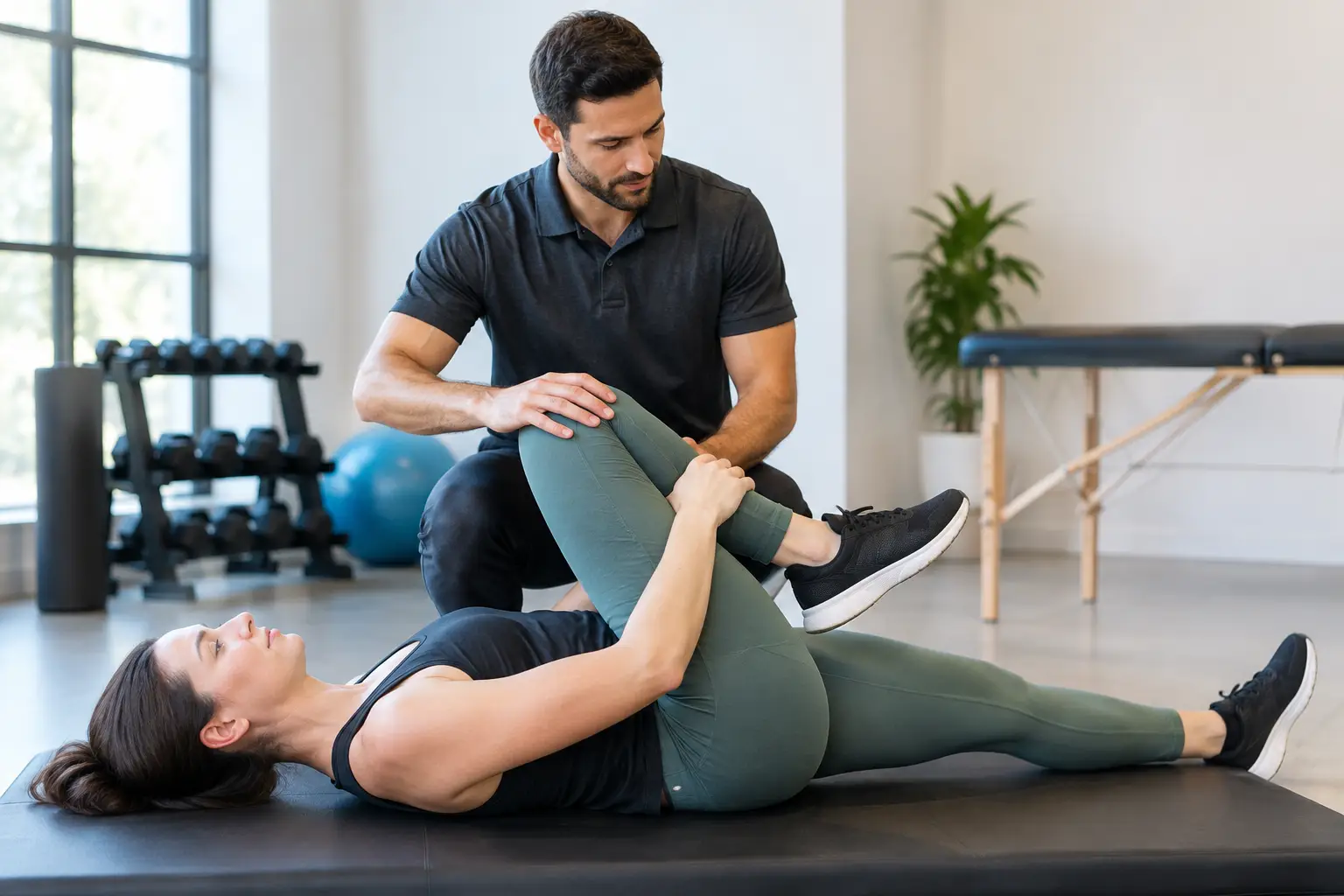
Low back pain rarely stays neatly in the low back. When bending to load the dishwasher feels guarded, squatting at the gym feels uneven, or getting out of the car requires a reset, the whole body often starts adapting. This guide to full body mobility is for people whose back pain has begun to affect how they move through work, training, sport, and daily life.
The goal is not to chase flexibility or force every joint through a bigger range. It is to understand why movement has become limited, identify the movements that matter to you, and rebuild comfortable, capable motion with the right amount of load.
When low back pain becomes a full-body mobility problem
Low back pain is a broad complaint rather than one single diagnosis. It can involve irritated joints, muscles, discs, nerves, or a combination of factors that make the back more sensitive to certain movements or workloads. In many cases, the exact tissue source is less important than understanding your pattern: what started it, what keeps provoking it, and what you can currently tolerate.
Pain also changes movement. You may avoid hinging at the hips and bend mostly through your knees, rotate less when walking, brace excessively through your abdomen, or shift weight away from one leg. These strategies can be useful for a short time, but they can become limiting if they remain long after the initial flare-up.
That is why a person can describe their problem as "tight hips," "stiff hamstrings," or "poor mobility" when the bigger issue is persistent low back pain and reduced confidence in movement. The hips, upper back, and ankles may contribute to the way a task feels, but they are not automatically the root cause.
Common symptoms and movement limits
Low back pain can be local, felt across one side of the back, or accompanied by discomfort into the buttock or leg. Symptoms may be sharp during a specific movement, dull after a long day, or stiff and guarded first thing in the morning.
Mobility limitations often show up in real tasks rather than on a flexibility test. You might notice pain or restriction when putting on socks, lifting a child, deadlifting, sitting through a commute, standing at a workbench, running, or returning to golf. Some people are comfortable in one position but sore when changing positions. Others can train, but symptoms build later that day or the next morning.
Leg pain, tingling, numbness, or weakness can occur when a nerve is irritated. These symptoms deserve a more thorough assessment, especially if they are worsening or significantly affecting strength and walking tolerance.
Why the body starts feeling stiff
Stiffness is not always a sign that a muscle is physically short or that a joint is stuck. After pain, the nervous system may increase muscle tension and reduce how freely you move because it perceives a movement as threatening or poorly tolerated. The sensation is real, but the solution is not always a longer stretch.
A reduced ability to use the hips during lifting can make the back work harder. Limited upper-back rotation may make twisting tasks feel more demanding through the lumbar spine. An ankle that does not tolerate a deep bend can alter a squat or step-down. These relationships matter, but they need to be assessed in context.
Workload is often the missing piece. A back can tolerate bending, sitting, lifting, or running until a sudden increase in volume, intensity, fatigue, or recovery demands pushes it beyond its current capacity. One awkward lift may trigger a flare-up, but recurring episodes commonly reflect a gap between what life requires and what the body has been progressively prepared to handle.
What commonly aggravates low back pain
The most aggravating movements vary. Some backs dislike repeated bending and prolonged sitting. Others are aggravated by standing, walking downhill, arching, overhead lifting, or rotation. Many people have a mix of triggers depending on how much they have done that day.
Avoiding every uncomfortable movement can make your world smaller. On the other hand, pushing through sharp, escalating pain because an exercise is supposed to be good for mobility can prolong a flare-up. The useful middle ground is graded exposure: choosing a tolerable version of a task, building capacity, then progressing it as symptoms and control improve.
For example, someone whose back hurts during a barbell deadlift may initially tolerate a raised-kettlebell hinge better. Someone irritated by a deep squat may begin with a box squat, controlled split squat, or a smaller range. This is not lowering the standard permanently. It is creating an entry point for productive loading.
When to have low back pain assessed
An assessment is worthwhile if pain keeps returning, limits work or training, spreads into the leg, or has not improved with sensible activity modification. It is also useful when you have tried rest, generic stretching, massage, or online exercises and still do not know why the problem returns whenever you resume normal activity.
Seek urgent medical attention for new bowel or bladder changes, numbness in the saddle area, severe or progressive leg weakness, unexplained fever, significant trauma, unexplained weight loss, or pain that is severe and unrelenting at rest. These are not typical signs of routine mechanical low back pain and need prompt medical review.
A guide to full body mobility that starts with assessment
A useful assessment does more than identify where you feel tight. It looks at the history of your symptoms, your daily demands, past injuries, training habits, and the movements that are currently limited. It should include relevant testing of lumbar motion, hip movement, strength, balance, neurological signs when indicated, and functional tasks such as squatting, hinging, stepping, carrying, or rotating.
The objective is not to find one perfect exercise or a single structure to blame. It is to establish a working plan. If bending is sensitive, you may need to improve hip control, trunk endurance, and tolerance to gradually deeper hinges. If prolonged sitting is the trigger, the plan may involve building movement breaks, improving tolerance to transitions, and restoring strength rather than simply avoiding chairs.
Hands-on treatment can be useful when pain and guarding are making it hard to move or exercise. Joint mobilization or manipulation, deep soft tissue work, Graston or instrument-assisted soft tissue therapy, cupping, and Class IV laser therapy may be considered based on the presentation. These tools can help create a window for movement, but they are not the whole plan. Lasting progress comes from pairing symptom management with rehabilitation that changes your capacity.
Building movement capacity without chasing perfect range
Mobility rehabilitation for low back pain usually starts with movements you can perform with reasonable control and manageable symptoms. This could include supported hip hinges, controlled spinal movement, hip rotation work, thoracic rotation, split-stance exercises, carries, and gradual squat or lifting variations. The specific exercise matters less than whether it matches your current limitations and goals.
Progressive loading is where many recurring back problems finally change. Your back needs to tolerate the demands you place on it, whether that is carrying tools, picking up a toddler, playing hockey, or returning to heavy lifting. Strength work gives you options: more ability to hinge, brace, rotate, carry, push, pull, and recover from a demanding day.
Symptoms can fluctuate during rehabilitation. Mild discomfort that settles quickly and does not reduce function may be acceptable in some cases. Sharp pain, increasing symptoms during a session, spreading neurological symptoms, or a significant next-day flare suggests the exercise, range, volume, or load needs adjustment. Rehab should respond to your feedback rather than follow a rigid online template.
A practical path back to normal movement
At Ground Up Rehab, low back pain care is built around a clear assessment, meaningful hands-on treatment when it is appropriate, and a progressive plan to return you to the activities that matter. For a tradesperson, that may mean lifting and carrying without hesitation. For a runner, it may mean restoring stride tolerance. For a gym-goer, it may mean rebuilding confidence under a barbell instead of avoiding it indefinitely.
You do not need perfect full-body mobility to have a strong, resilient back. You need movement options, enough strength for your real-life demands, and a plan that progresses rather than keeps you stuck in short-term relief. If low back pain is changing how you move, book an assessment and get a plan that helps you return to activity with more confidence.
