Neck pain rarely stays confined to the neck. It can make checking blind spots difficult, turn a workday at the computer into a constant distraction, interrupt sleep, or make training feel unpredictable. Cupping therapy can be a useful hands-on option for some people with neck pain, but it is not a cure and it should not be the entire plan.
At Ground Up Rehab, the goal is not simply to make a sore area feel different for an hour. It is to understand why your neck is irritated, reduce the factors driving it, and build the movement capacity and strength needed to return to work, training, sport, and daily life with more confidence.
What neck pain can feel like
Neck pain is a broad complaint, not a single diagnosis. It may feel like a dull ache across the base of the neck, tightness through the upper traps, a sharp catch when looking over one shoulder, or stiffness after sitting. Some people also notice headaches, pain around the shoulder blade, or soreness that builds after lifting, driving, or using a laptop.
The source is not always obvious. Pain may be linked to irritated joints, sensitive muscles, reduced tolerance to sustained positions, a recent strain, or a gradual increase in training or work demands. In some cases, symptoms travelling into the arm, numbness, tingling, or weakness may suggest nerve involvement and deserve a more detailed assessment.
That is why two people who both say they have a “stiff neck” may need very different rehabilitation plans.
Why neck pain keeps returning
A neck flare-up is often not caused by one imperfect posture or one awkward movement. More commonly, it reflects a mismatch between what your neck and upper body can currently tolerate and what life is asking of them.
For a desk worker, that may be long, uninterrupted stretches at a screen combined with poor sleep and little variation in movement. For a tradesperson, it could be repeated overhead work, carrying, vibration, or working in constrained positions. For a lifter or recreational athlete, symptoms may appear after a sudden jump in volume, heavy pressing, contact, falls, or simply returning to training too aggressively after time away.
Stress, low recovery, prior injuries, and guarded movement can also contribute. These factors do not mean the pain is “all in your head.” They influence how sensitive the area becomes and how much load it can handle before symptoms show up.
Where cupping therapy fits for neck pain
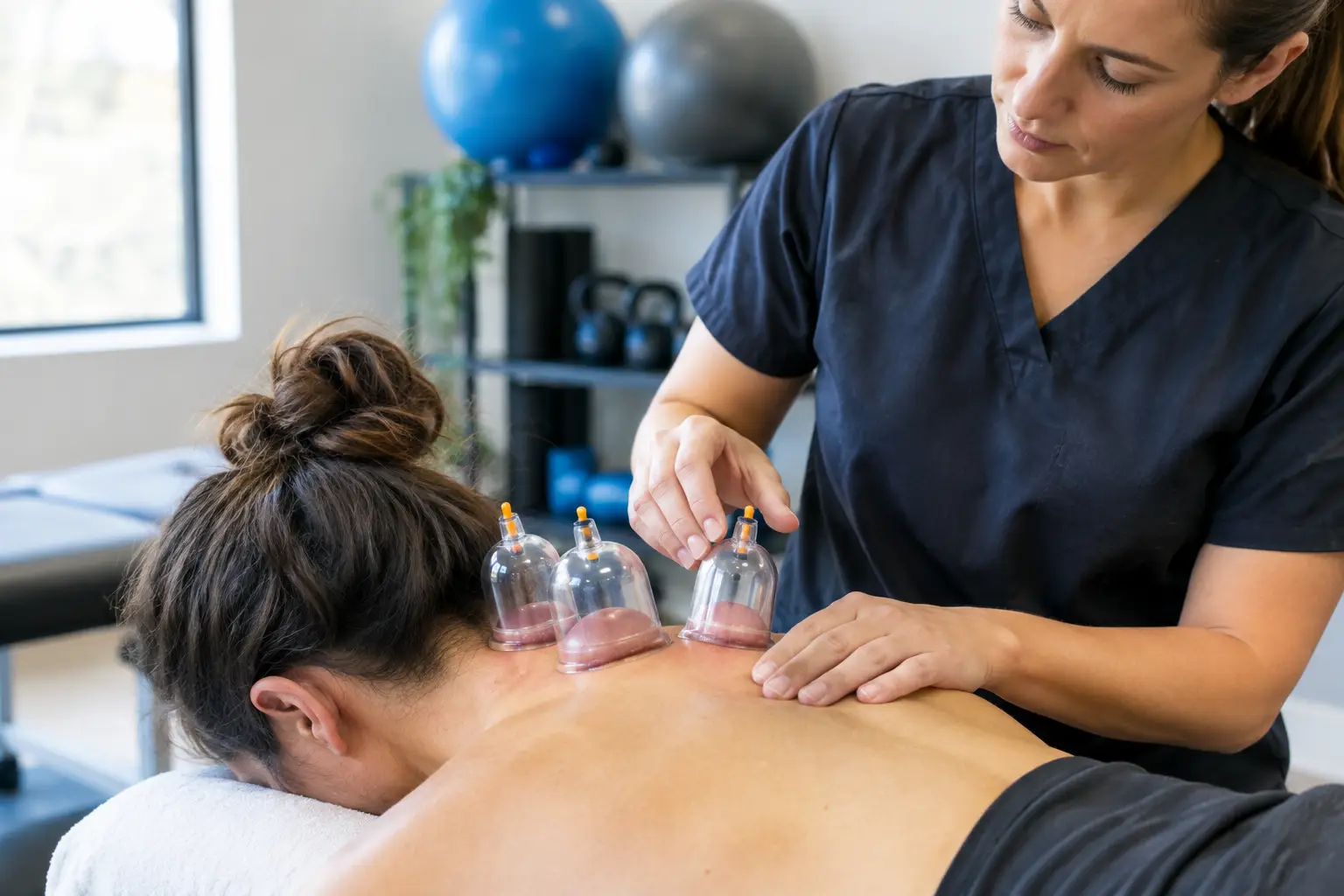
Cupping therapy uses suction cups on the skin to create a pulling sensation over the targeted area. In a rehabilitation setting, it may be used around the upper traps, shoulder blade region, upper back, or other muscles contributing to a neck pain presentation.
Some patients report that cupping helps decrease the feeling of tightness, makes turning their head more comfortable, or gives them a temporary window to move and exercise with less irritation. That window can be valuable. If hands-on treatment helps you comfortably perform the mobility work, strength exercises, or graded return to activity your neck needs, it can support progress.
The marks left by cupping are common and can range from light pink to dark purple. They are not toxins leaving the body, and darker marks do not mean the treatment worked better. They are simply a response to the suction and usually fade over several days to a couple of weeks.
Cupping is not right for every situation. It may be avoided or modified where there is skin irritation, infection, open wounds, certain bleeding concerns, reduced sensation, or other relevant medical considerations. A clinician should screen for this before treatment.
What cupping therapy cannot do
Cupping does not permanently release muscles, break up scar tissue, realign the spine, or fix the root cause of persistent neck pain on its own. Those explanations are appealing because they sound simple, but most neck pain is more complex than a structure being “stuck.”
It also should not become the only thing that keeps you functioning. If symptoms improve briefly after passive treatment but return every time you work, drive, lift, or train, the missing piece is often a plan to gradually restore capacity.
That does not make hands-on care pointless. It means it should have a purpose. Treatment should help you move better now while rehabilitation helps you keep moving better later.
When neck pain should be assessed
An assessment is a smart next step when neck pain has lasted more than a few weeks, keeps returning, limits sleep or work, or prevents you from exercising normally. It is also worth getting checked when you have tried rest, stretching, massage, or generic online exercises but still feel stuck.
Seek prompt medical assessment for severe neck pain following significant trauma, new or progressive arm weakness, worsening numbness, trouble with balance or coordination, unexplained fever, severe unremitting headache, or other symptoms that feel unusual for you. Those signs need more than a routine musculoskeletal treatment plan.
How a rehab assessment guides treatment
A useful assessment goes beyond finding the tightest muscle. It starts with your story: when the problem began, what triggers it, what eases it, how it affects work and training, and what you have already tried.
From there, a clinician may assess neck movement, shoulder and upper-back function, strength, neurological signs when relevant, and your tolerance to the positions or activities that reproduce symptoms. For example, the approach for pain after hours at a computer may differ from the approach for pain during overhead pressing or after a car accident.
The aim is to identify the most relevant drivers of your current presentation and establish a starting point you can build from. A diagnosis can be helpful, but a practical plan also needs to answer: what can you do now, what needs to change, and how will you return to the things that matter to you?
A more complete plan for neck pain
Treatment may include targeted hands-on care such as deep soft tissue therapy, joint mobilization or manipulation when appropriate, Graston or instrument-assisted soft tissue therapy, Class IV laser therapy, or cupping. The right choice depends on your symptoms, preferences, examination findings, and response to care. No modality is automatically necessary.
The active portion of care is where longer-term change is built. Early rehabilitation may include comfortable neck movement, upper-back mobility, or simple isometric exercises to help restore confidence and reduce guarding. As symptoms settle, the plan should progress toward strengthening the neck, shoulder girdle, and upper back, then toward the demands of your actual life.
For someone who works at a desk, that may include strategies to break up sustained positions and build tolerance for a full day without relying on perfect posture. For a gym-goer, it may mean adjusting pressing, pulling, carries, or bar position temporarily, then progressively reloading those movements. For a tradesperson, rehabilitation may focus on lifting, reaching, carrying, and repeated task tolerance.
The progression matters. Doing too little for too long can leave the neck sensitive and deconditioned. Doing too much too soon can provoke another flare-up. The right dose sits between avoidance and aggravation, then changes as your capacity improves.
How Ground Up Rehab approaches neck pain
Ground Up Rehab combines meaningful hands-on treatment with progressive rehabilitation rather than asking patients to rely on passive care indefinitely. If cupping therapy helps reduce pain or improve movement during a neck flare-up, it may be used as one tool within a broader plan. If it does not add meaningful value, there are other options.
The priority is always to connect treatment to a clear outcome: turning your head while driving, getting through a shift, sleeping more comfortably, returning to the gym, or playing your sport without constantly protecting your neck. That is a more useful measure of progress than whether a muscle felt temporarily looser on the table.
If your neck pain sounds familiar, book an assessment in Hamilton. A focused evaluation can help clarify what is driving the problem and give you a practical path back to moving, working, and training with fewer limitations.
