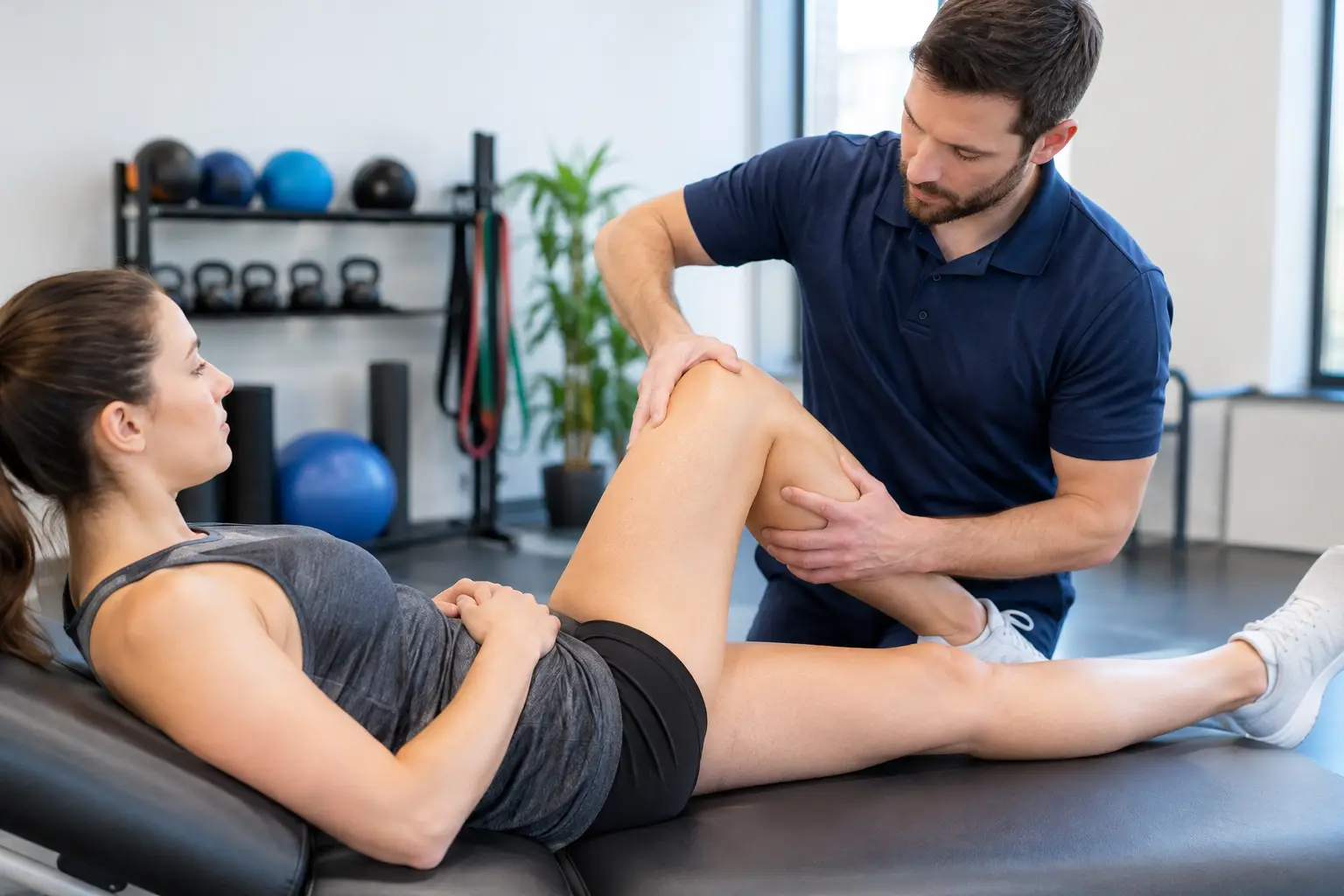
Patellofemoral pain can make ordinary movements unexpectedly frustrating. A set of stairs, a long drive, a deep squat at the gym, or getting up after a movie can all create that familiar ache around or behind the kneecap. Understanding the common patellofemoral pain triggers helps explain why the knee may feel fine one day and irritated the next - and why simply resting until it settles often does not solve the bigger problem.
What is patellofemoral pain?
Patellofemoral pain is a broad term for pain felt at the front of the knee, usually around or behind the patella, or kneecap. It is sometimes called runner's knee, but it affects far more than runners. Gym-goers, people returning to exercise, tradespeople who kneel or squat, parents carrying kids, and adults whose knees ache after sitting can all experience it.
The patellofemoral joint is where the kneecap moves against the end of the thigh bone as the knee bends and straightens. This joint is built to handle load. Problems often develop not because a person bends their knee, runs, squats, or uses stairs, but because the total demand placed on the knee has exceeded what it is currently prepared to tolerate.
Symptoms can be dull, sharp, aching, or hard to pinpoint. Some people notice clicking or grinding. Those sounds alone are common and are not necessarily a sign of damage. More useful clues are whether pain is building with activity, limiting confidence, or changing how you move.
The most common patellofemoral pain triggers
A sudden jump in training or activity
A quick change in volume, intensity, frequency, or terrain is one of the most common reasons patellofemoral pain starts or flares up. This might be adding hill runs after a winter off, increasing squat volume, joining a fitness class, starting a job with more stairs, or suddenly walking much farther every day.
The issue is rarely one workout in isolation. It is often the combination of several new demands with too little time for the knee to adapt. A person may tolerate two runs per week, for example, but develop symptoms when they add leg day, weekend hiking, and a busier work schedule at the same time.
Deep knee bend positions under load
Squats, lunges, split squats, step-downs, kneeling, and getting low for work can aggravate the front of the knee because the patellofemoral joint experiences more compressive force as the knee bends deeper. This does not mean deep squatting is harmful or needs to be avoided forever. It means the current dose may be too high for an irritated knee.
How the exercise is performed matters. Load, depth, repetitions, tempo, fatigue, and recovery between sessions all change the demand. Someone may tolerate a controlled bodyweight squat but not a heavily loaded, high-repetition set after a hard run.
Running hills, stairs, and downhill routes
Stairs and hills commonly provoke patellofemoral symptoms because they require repeated knee bend while the quadriceps work hard to control the body. Downhill walking and running can be especially irritating because the muscles must control the descent with each step.
This is why a runner can feel comfortable on flat ground but notice pain on the Hamilton escarpment, during hill repeats, or when descending stairs at work. The hill itself is not the root cause. It simply exposes a gap between the knee's current capacity and the demand being placed on it.
Prolonged sitting with the knee bent
Pain after sitting, driving, or watching a game with the knee bent for a long time is another familiar pattern. The knee can feel stiff or achy when standing up, then ease after a few minutes of walking.
This response does not necessarily mean the knee is damaged. It can reflect sensitivity at the patellofemoral joint, especially when the knee has been irritable from other loading such as training, stairs, or work demands. Regular position changes can help, but the long-term goal is improving overall tolerance rather than organizing life around avoiding every bent-knee position.
Weakness, fatigue, or poor load sharing
The quadriceps play a major role in controlling the knee. The hips, calves, trunk, and foot also contribute to how force is managed during running, jumping, stairs, and squatting. If one area lacks strength, endurance, coordination, or confidence after an injury, more demand may be placed on other structures.
This is not about finding one weak muscle and blaming it for every case of knee pain. People with patellofemoral pain do not all move the same way, and there is no single ideal squat or running pattern. A useful assessment looks at the tasks that hurt, the person’s strength and tolerance, training history, and the movement strategies that may be relevant for them.
Too little recovery between demanding sessions
The knee responds to total stress, not only exercise. Poor recovery can make a previously manageable training plan feel too aggressive. High work demands, reduced sleep, a return to sport after illness, long days on your feet, or stacking hard lower-body sessions can all reduce the margin for error.
That does not mean every flare-up requires complete rest. In fact, removing all activity for too long can reduce capacity further. The more effective approach is usually to adjust the aggravating load temporarily, maintain tolerable movement, and build back up with a clear progression.
Why pain can flare up even when nothing obvious happened
Patellofemoral pain is often influenced by accumulation. The knee may handle a series of small stresses until one more workout, walk, or day on the stairs pushes symptoms over the line. That can make the flare-up feel random, but there is usually a pattern when recent activity is reviewed closely.
Pain also does not always match tissue damage. A sensitive knee can hurt during a movement that is still safe and useful to gradually reintroduce. On the other hand, forcing through steadily worsening pain is rarely productive. The practical middle ground is identifying an acceptable level of discomfort, monitoring the response later that day and the next morning, and adjusting the plan if symptoms remain elevated.
When patellofemoral pain needs an assessment
An assessment is worthwhile when front-of-knee pain keeps returning, stops you from training or working normally, or has not improved despite reducing activity. It is also sensible if you are unsure whether the pain is truly patellofemoral, since other knee problems can create similar symptoms.
Seek timely medical assessment for significant swelling, a knee that locks or repeatedly gives way, inability to bear weight after an injury, fever or unexplained illness with a hot swollen joint, or severe pain following trauma. These signs need a different level of investigation than a typical gradual-onset kneecap ache.
How a rehabilitation plan should address the triggers
A good plan starts by identifying which tasks are provoking symptoms and why the current load has become difficult. At Ground Up Rehab, this may include assessing squat, step, running, or work-specific movements; comparing strength and control; reviewing training volume; and checking mobility where it is relevant to the task. The goal is not to chase perfect movement. It is to find the factors that can realistically improve your tolerance.
Hands-on treatment may be used when it helps reduce pain, improve short-term movement options, or make exercise more tolerable. Depending on the presentation, this can include joint mobilization, deep soft tissue treatment, or instrument-assisted soft tissue therapy. These approaches are not standalone cures for patellofemoral pain. They work best when paired with progressive rehabilitation.
Rehabilitation commonly includes building quadriceps capacity, strengthening the hips and calves where appropriate, and gradually exposing the knee to the movements that matter to you. For one person, that may mean a staged return to stairs and walking. For another, it may involve rebuilding squat depth, running mileage, jumping, or confidence under a barbell. The plan should fit the actual trigger, not a generic list of knee exercises.
Progressive loading is the part that turns short-term symptom improvement into a more durable return to activity. If hills flare your knee, the answer may be to reintroduce hills in manageable doses rather than avoid them indefinitely. If deep squats hurt, the starting point may be a modified range or variation before gradually restoring the depth and load you want.
If your knee pain sounds like this pattern, book an assessment in Hamilton to get a clear plan for moving, training, and using stairs with more confidence.
