You felt the pull during a deadlift, rolled your ankle on a trail run, or noticed that familiar knee pain halfway through soccer. Now the question is: chiropractic or physio for sports injuries? It is a fair question, but the better one is whether the provider can assess what is limiting you, reduce the immediate barriers to movement, and build a plan that gets you back to your sport with more confidence.
For most active people, the strongest answer is not about choosing a professional label. It is about choosing a rehab approach that fits the injury, your training demands, and the outcome you actually want. Feeling better for a day matters. Being able to squat, run, lift, work, or play without repeatedly hitting the same wall matters more.
Chiropractic or Physio for Sports Injuries: What Is the Difference?
Chiropractors and physiotherapists both work with many common sports injuries, including tendon pain, muscle strains, joint sprains, back pain, neck pain, shoulder issues, and running-related complaints. Both can assess movement, provide education, use hands-on treatment, and prescribe exercise. The exact scope, training emphasis, and treatment tools can differ, but there is meaningful overlap.
Physiotherapy is often closely associated with exercise-based rehabilitation, recovery after surgery, and restoring function after injury. A physiotherapist may focus heavily on graded exercise, tissue loading, mobility, balance, and return-to-sport progressions.
Rehab-focused chiropractic care can also include exercise prescription and movement retraining, alongside joint mobilizations, adjustments when appropriate, soft tissue therapy, and other hands-on strategies. A chiropractor who works with active people should not simply chase a painful spot or provide the same adjustment at every visit. They should look at how you move, train, recover, and load your body over time.
Neither profession is automatically the right answer because of the title on the door. A runner with Achilles pain, a lifter with shoulder pain, and a hockey player returning from an ankle sprain all need a plan that reflects the demands they are returning to.
The Real Question: What Does Your Rehab Plan Include?
If you have tried rest, massage, generic stretches, or quick appointments and the pain keeps returning, the problem may not be that you chose the wrong profession. Your plan may have stopped too early.
Sports injuries are rarely solved by one treatment tool. Hands-on care can reduce pain, improve short-term range of motion, or make exercise more tolerable. That can be valuable, especially when your symptoms are irritable. But it does not replace the work of rebuilding strength, coordination, capacity, and confidence.
A useful rehab plan generally has three parts. First, it identifies the current problem: what movements hurt, what activities have changed, and what physical limitations may be contributing. Second, it helps settle the issue enough that you can move and train appropriately. Third, it progressively reloads the body for the task that matters to you.
That last piece is where many active people get stuck. Being pain-free while lying on a treatment table is not the same as being ready for a heavy set of squats, a 10-kilometre run, a full shift on your feet, or a weekend tournament.
When Chiropractic Care May Be a Good Fit
Chiropractic care may be a strong option if you want a detailed assessment combined with hands-on treatment and progressive rehab. This can be particularly helpful when pain, stiffness, or movement restriction is making it difficult to start exercising normally.
For example, someone with acute low-back pain after lifting may benefit from a clinician who can assess their squat or hinge pattern, use manual therapy if it is appropriate, modify training without telling them to stop everything, and gradually rebuild tolerance to loading. The goal is not to make the back feel “perfect” before movement resumes. It is to create a sensible path back to movement while respecting symptoms.
The same applies to shoulder, hip, neck, and mid-back complaints. Joint mobilization, adjustments, soft tissue work, cupping, Class IV laser therapy, or shockwave therapy may sometimes be used to support the early stages of care. They are tools, not the entire plan. The value comes from using them in the right context, then following through with targeted mobility and strength work.
When Physiotherapy May Be a Good Fit
Physiotherapy may be especially useful when your injury requires a highly structured return to sport, post-operative rehabilitation, gait retraining, or more extensive exercise progression. A physio can help map out the steps from basic movement to sport-specific tasks, particularly when the injury has significantly changed how you walk, run, jump, or use a limb.
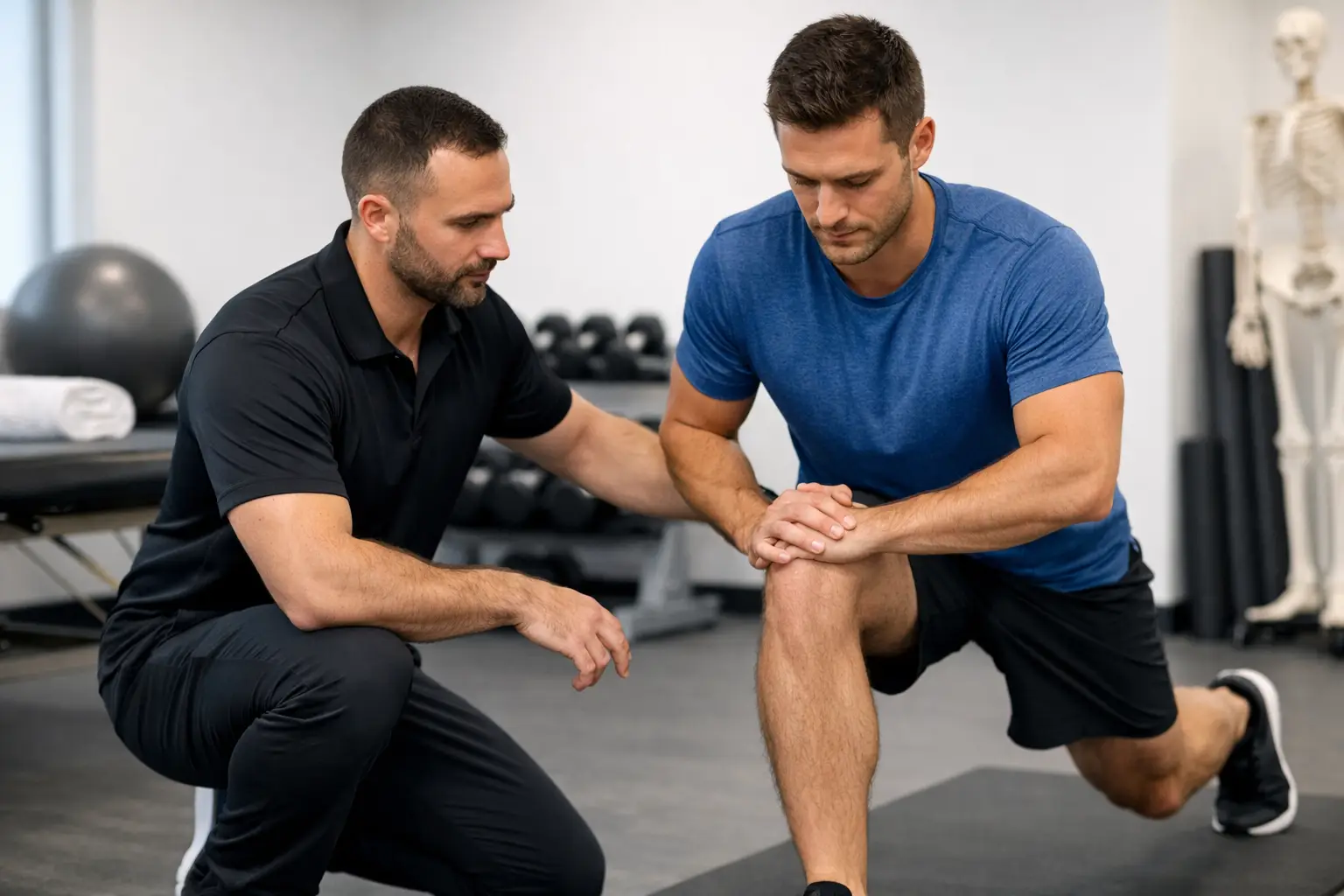
Physiotherapy can also be a great fit if you need support building tolerance after a longer period away from activity. Maybe your knee no longer trusts a lunge after an old injury. Maybe your hamstring feels fine jogging but tightens up during faster sprints. A progressive program can expose you to the right amount of challenge without jumping straight from rehab bands to game-day intensity.
That said, good physiotherapy is not defined by a sheet of generic exercises any more than good chiropractic care is defined by an adjustment. The plan should evolve as your symptoms, strength, and goals change.
Why a Combined Rehab Approach Often Makes Sense
For many injuries, the best care is collaborative rather than either-or. A clinic that combines chiropractic care, physiotherapy, massage therapy, and gym-based rehabilitation can match the approach to your needs instead of forcing every problem into one treatment style.
At Ground Up Chiropractic and Rehab in Hamilton, that means starting with more than the painful body part. Your assessment should consider your symptoms, training history, work demands, recovery, movement patterns, and the activity you want to return to. A golfer with back pain, a CrossFit athlete with a cranky shoulder, and a desk worker training for their first race may all report similar discomfort, but their rehab should not look identical.
One phase may prioritize hands-on treatment to help you move with less restriction. The next may focus on single-leg strength, trunk control, tendon loading, or shoulder stability. Later, gym-based programming can bridge the gap between basic rehab exercises and the lifts, runs, jumps, or sport-specific movements you need to perform.
This does not mean every person needs every service. It means your treatment should be selected because it fits the problem, not because it is the only option available.
What a Good Return-to-Sport Plan Looks Like
A strong plan is specific, measurable, and realistic about the fact that recovery is rarely perfectly linear. Symptoms can fluctuate as you increase activity. The goal is to recognize what is a manageable response to loading and what signals that the plan needs adjustment.
Your provider should help you answer practical questions: Can you keep training while recovering? Which exercises should be modified? How much running is reasonable this week? When can you return to heavier lifting? What should you do if symptoms flare after practice?
The answers depend on the injury and the person. Complete rest may be appropriate briefly after some injuries, but prolonged rest often reduces capacity and makes return to activity feel harder. In many cases, modified movement is more useful than doing nothing. That could mean reducing range of motion, tempo, load, volume, speed, or frequency while gradually building back up.
Progress should be judged by more than pain alone. Better range of motion, stronger single-leg control, improved tolerance to training volume, and more confidence in a previously painful movement are all meaningful signs that you are moving forward.
When You Need Medical Assessment First
Most sports aches and strains can be assessed by a qualified rehab professional, but some symptoms need prompt medical attention. Seek urgent assessment for severe or worsening pain after a significant injury, an obvious deformity, inability to bear weight, loss of sensation or strength, unexplained fever, chest pain, or changes in bladder or bowel control. When in doubt, get evaluated.
For the more common frustrating injuries - the shoulder that pinches every time you press, the knee that complains on stairs, the ankle that never felt stable after a sprain - do not settle for a plan that only helps until your next workout. Book an assessment with a provider who can connect symptom relief to progressive rehab and the demands of your real life.
The best choice is the care that helps you understand the next step, keep moving where appropriate, and earn your way back to the activities you care about.
