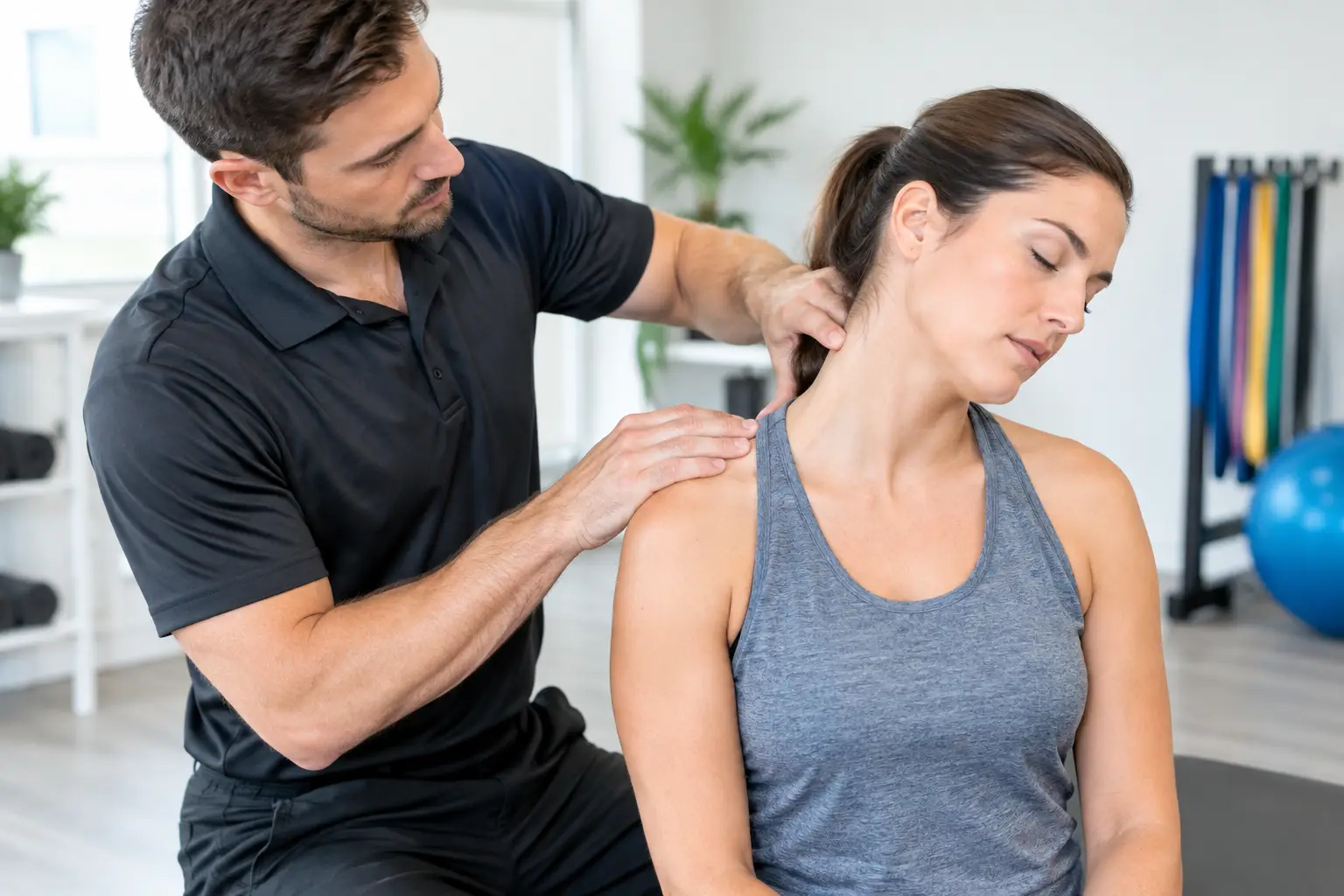
Pain at the side of the neck, top of the shoulder, or down the arm can make training, desk work, driving, and sleep frustrating fast. The challenge with cervical radiculopathy versus shoulder pain is that the same person may point to the same general area, while the source of the symptoms is completely different. Treating a sore shoulder when the neck is driving the problem, or vice versa, can keep the cycle going.
A focused assessment looks beyond where it hurts. It considers symptom behaviour, movement, strength, sensation, workload, and the activities that reliably trigger the problem. That is how you build a plan that gets someone back to lifting, working, reaching, or playing sport with more confidence.
What is cervical radiculopathy?
Cervical radiculopathy occurs when a nerve root in the neck becomes irritated or compressed. Nerve roots leave the cervical spine and travel into the shoulder, arm, and hand. When one is sensitive, symptoms can be felt well away from the neck.
Common contributors include age-related changes around the discs or joints of the neck, a disc bulge or herniation, narrowing of the space around a nerve, or a sudden load the neck was not prepared to handle. It can develop after an awkward sleeping position, a collision, repetitive overhead work, or gradually with no single memorable incident.
The word “radiculopathy” can sound alarming, but symptoms vary widely. Some people have a short-lived flare-up; others notice persistent arm symptoms that interfere with work, exercise, or sleep. The right next step depends on the severity, progression, and findings on assessment.
What shoulder pain can come from
Shoulder pain is not one diagnosis. It may relate to the rotator cuff, biceps tendon, joint capsule, acromioclavicular joint at the top of the shoulder, or the way the shoulder is tolerating work, sport, and daily demands. A painful shoulder can also become stiff and guarded after an injury or period of reduced use.
Rotator cuff-related shoulder pain commonly hurts with reaching overhead, lifting away from the body, putting on a jacket, or lowering a weight. A more irritable shoulder may ache at night, particularly when lying on that side. Frozen shoulder tends to produce a more noticeable and progressive loss of motion in several directions. Pain at the top of the shoulder after a fall or heavy pressing may point more toward the acromioclavicular joint.
These patterns are useful clues, not self-diagnosis tools. Shoulder structures often share symptoms, and neck and shoulder issues can coexist.
Cervical radiculopathy versus shoulder pain: key differences
The location of pain alone does not settle the question. A nerve-related problem can feel like shoulder pain, while a shoulder problem can create tension into the neck because the body is guarding or compensating.
Cervical radiculopathy is more likely to involve symptoms that travel below the shoulder. This may include pain into the upper arm, forearm, hand, or specific fingers. Tingling, numbness, burning, electric sensations, or a feeling of arm weakness can also raise suspicion that a nerve is involved. Symptoms may change with neck movement, looking up, turning the head, prolonged sitting, or certain sleeping positions.
Shoulder-driven pain is more often felt directly around the shoulder, upper arm, or shoulder blade region. It tends to be more reliably provoked by using the arm, especially reaching, pressing, pulling, throwing, carrying, or lying on the affected side. Neck motion may feel stiff or uncomfortable, but it does not consistently reproduce the familiar arm symptoms.
There is overlap. A person with cervical radiculopathy may hurt while pressing overhead because that position also challenges the neck and nervous system. Someone with shoulder pain may feel pain down the upper arm and assume it is a pinched nerve. This is why online symptom checklists are a starting point, not a diagnosis.
Patterns that deserve closer attention
A change in sensation, clear loss of grip or arm strength, increasing clumsiness, or symptoms travelling into the hand warrant a proper assessment. A clinician can test strength, reflexes, sensation, neck movement, shoulder movement, and how symptoms respond to specific positions.
Seek urgent medical care for symptoms following significant trauma, severe and unrelenting pain with fever or feeling unwell, sudden major weakness, problems with balance or walking, or changes in bladder or bowel control. Those symptoms need medical assessment rather than a wait-and-see approach.
Why the wrong treatment focus can stall progress
If arm pain is coming primarily from a sensitive cervical nerve root, repeatedly loading the shoulder without addressing neck movement, nerve sensitivity, and overall irritability may aggravate symptoms. On the other hand, avoiding shoulder loading indefinitely because of a suspected “pinched nerve” can leave a shoulder weaker, less confident, and less capable when shoulder tissue is actually the limiting factor.
Passive treatment alone can also fall short. Hands-on care may help reduce pain, improve short-term movement, and make exercise more tolerable, but long-term progress usually requires a plan for gradually restoring capacity. The goal is not just to calm a flare-up. It is to make the neck, shoulder, and arm better prepared for the demands that matter to you.
How a focused assessment separates the two
A quality assessment starts with the story. When did the pain begin? Does it travel? What does it feel like? Has it changed over time? Which movements, positions, work tasks, gym exercises, or sleep positions aggravate it? What can you still do without a flare-up?
The physical assessment then compares neck and shoulder movement. It may include resisted strength testing, shoulder-specific tests, neurological screening, reflexes, sensation, grip strength, and carefully selected movements that reproduce or ease symptoms. The clinician is looking for patterns, not hunting for one dramatic test result.
Imaging is not automatically required. X-rays and MRI findings are common in people without pain, particularly as we age, and an image must match the symptoms and examination. Imaging or referral may be appropriate when there is significant trauma, progressive neurological change, suspected serious pathology, or symptoms that are not progressing as expected.
Treatment and rehabilitation that match the problem
For cervical radiculopathy, early care often focuses on reducing irritability while keeping you moving within tolerable limits. This may involve modifying provocative training or work tasks temporarily, improving comfortable neck and upper-back motion, and using graded nerve and arm loading where appropriate. Strength work is then progressed based on symptoms, not a rigid calendar.
For shoulder pain, the plan may place more emphasis on restoring shoulder motion, building rotator cuff and shoulder-blade strength, and progressively reintroducing the reaching, pressing, pulling, carrying, or sport-specific demands that currently hurt. The best exercise is not necessarily the fanciest one. It is the one you can perform well, load progressively, and connect to your actual goal.
Meaningful hands-on treatment can support this process. Depending on the assessment, joint mobilization or manipulation, deep soft tissue therapy, Graston or other instrument-assisted soft tissue work, cupping, Class IV laser therapy, or shockwave therapy may be considered. These tools are not standalone cures. They are used when they help reduce pain, improve movement tolerance, or create a better window to rehabilitate effectively.
Load management matters for both conditions. That does not always mean stopping activity. It might mean reducing pressing volume, changing grip or range of motion, breaking up sustained desk positions, temporarily avoiding repeated overhead work, or scaling a recreational sport. The plan should keep you as active as possible without repeatedly pushing symptoms into a bigger flare-up.
A practical path back to activity
Recovery is rarely about finding one perfect stretch or exercise. It is about matching the intervention to the source of symptoms, then progressing from what is currently tolerable to what your life requires. For a Hamilton tradesperson, that may mean overhead lifting and carrying. For a gym-goer, it may mean returning to bench press, pull-ups, and overhead work. For a parent, it may simply mean lifting a child or sleeping through the night without arm pain.
At Ground Up Rehab, the approach combines a thorough assessment, appropriate hands-on treatment, and progressive rehabilitation rather than relying on short-term symptom relief alone. If your neck, shoulder, or arm symptoms are limiting work, training, sleep, or daily activity, book an assessment and get a clearer plan for moving forward.
